
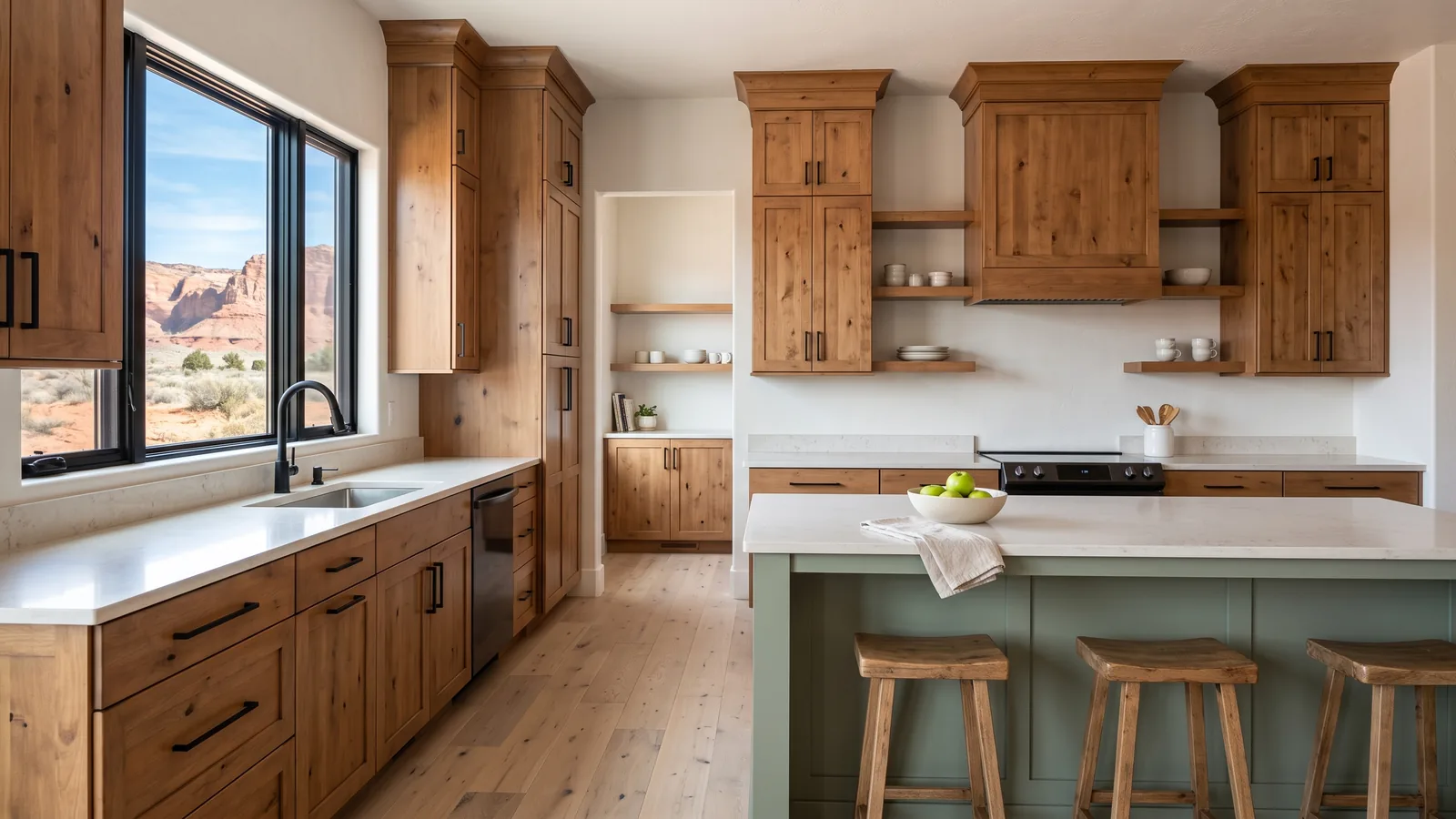
Entertainment Centers, Wall by Wall
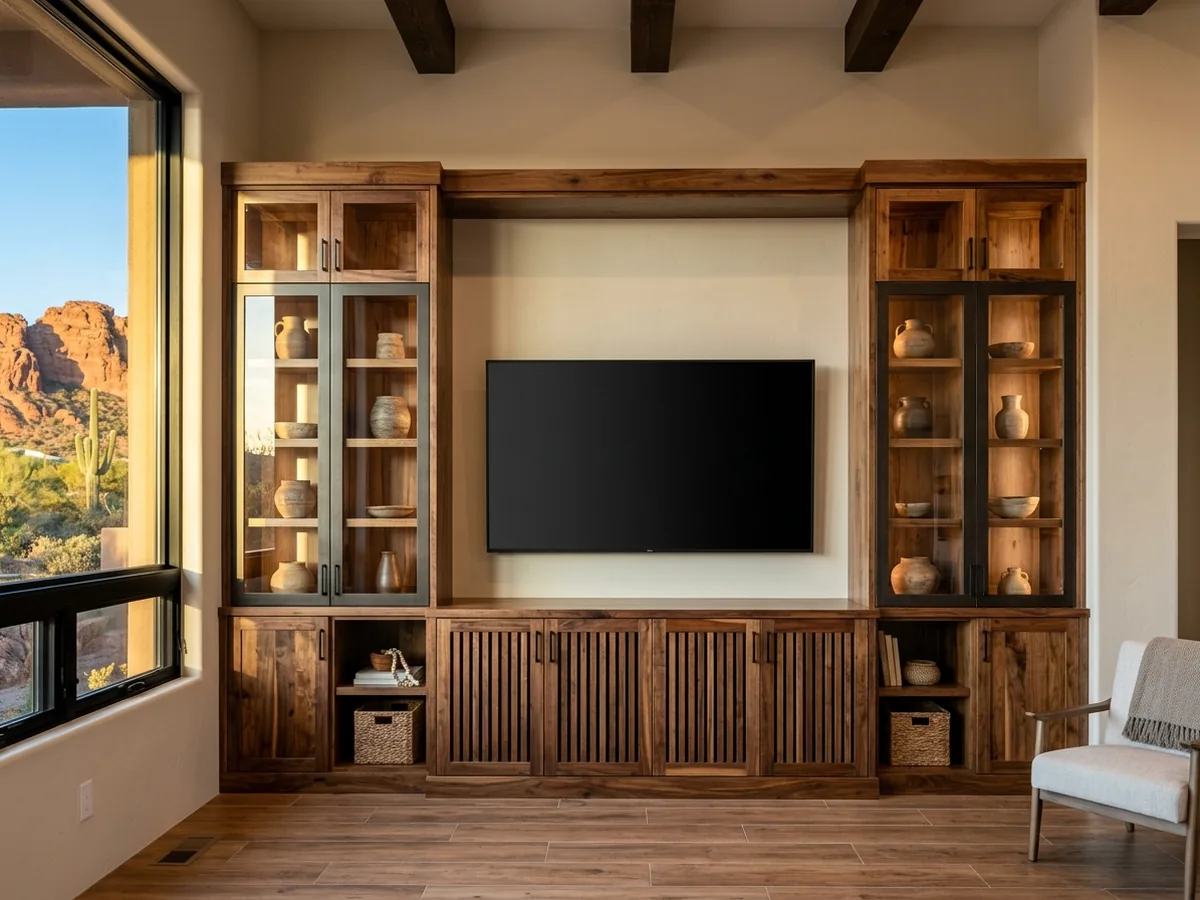
Floor-to-Ceiling Media Walls
A full media wall runs from floor to ceiling and side wall to side wall, with the TV in a center bay, base cabinets for equipment, and shelves or glass-door uppers on each side. Fixr puts full-wall units at $7,000 to $22,000, the top of its entertainment-center ranges. The design work is mostly about things you won't see. Power and low-voltage runs go in a chase or conduit hidden in the wall section, so swapping a console or soundbar later doesn't mean opening drywall. Equipment heat needs a path out through the back or top of the bay. And the screen bay is best drawn around the largest TV you might buy, not just today's. Wide panels are where wood movement shows, so expect frame-and-panel or veneered construction on anything broad, and read the humidity section below before choosing solid boards.
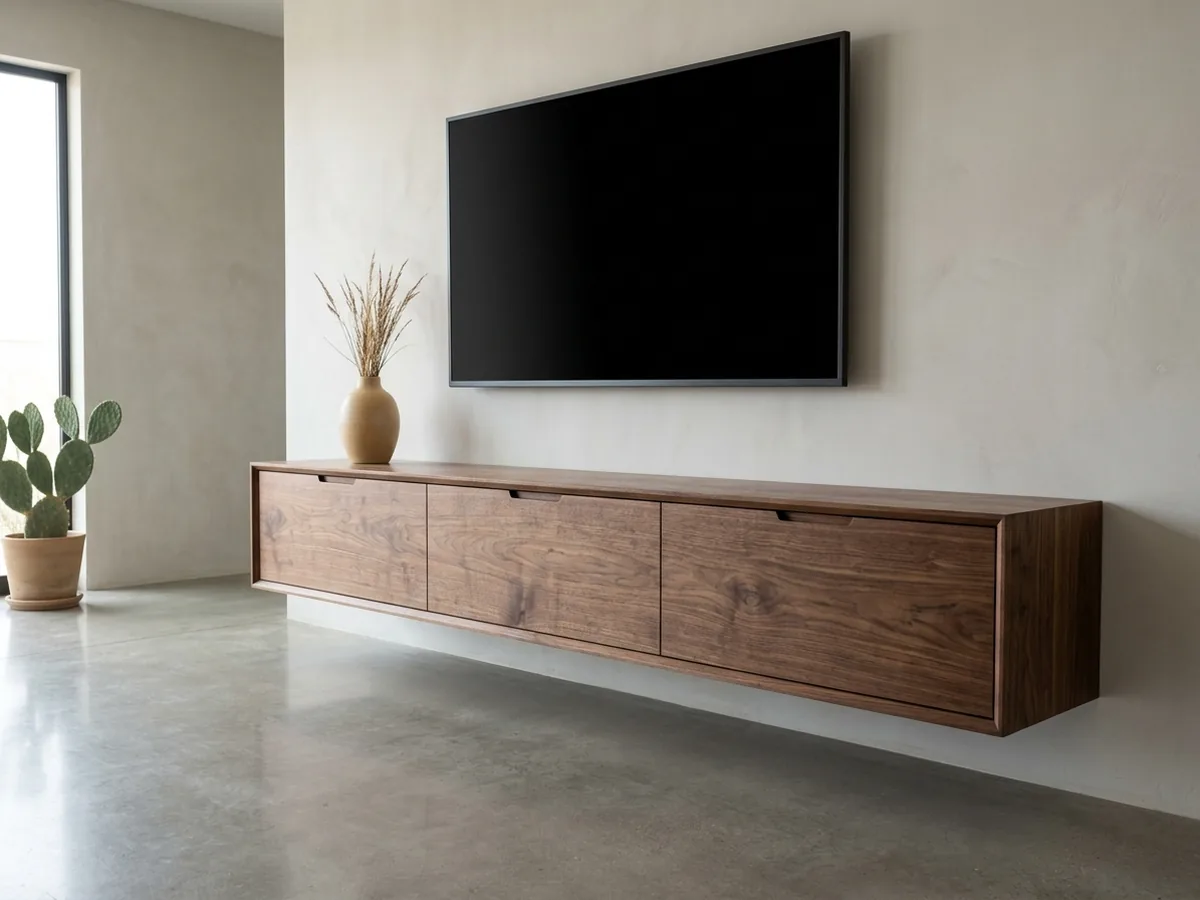
Floating Media Consoles
A floating console is one long cabinet hung on the wall, usually under a wall-mounted TV, with the floor clear beneath. It's the lightest option, and Fixr's range for floating units, $800 to $7,000, is the lowest of its types. It hangs on a cleat or brackets screwed into studs, so the console's length and the stud layout get worked out together. Drop-front doors on soft-stay hinges hold game consoles and a receiver, and drawers take controllers and cables. Push-to-open latches keep the front clean. Plan the wall behind it before anything is mounted. A recessed outlet and low-voltage box behind the TV lets the screen sit flat, and a pass-through conduit down to the console hides the cords. That part is electrical work; see cabinet installation for the permit side.
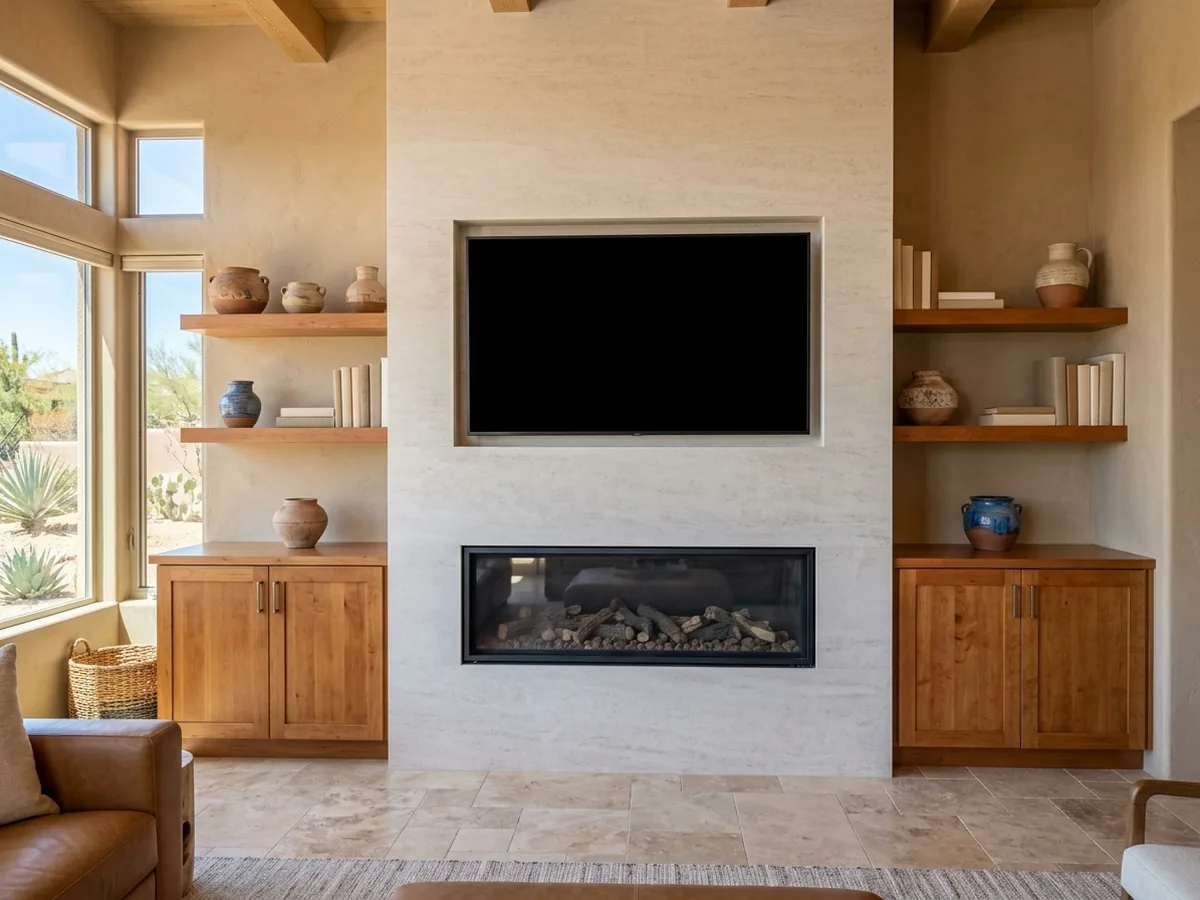
TV-Over-Fireplace Walls
The fireplace sets the rules for any cabinetry around it. For a masonry fireplace, the 2021 IRC (R1001.11) lets combustible mantels and trim sit on the fireplace front but not within 6 inches of the opening. Within 12 inches, wood may project only 1/8 inch for every inch of distance. That works out to 3/4 inch at 6 inches out and 1-1/2 inches at 12. A factory-built fireplace must be installed to the conditions of its listing (R1004.1), so its installation manual, not a rule of thumb, sets the clearances to mantels, side cabinets and the TV recess. Get that manual to the cabinet maker before design starts. Flanking cabinets with open shelves above are the usual layout. Check the TV maker's instructions for its operating temperature range too.
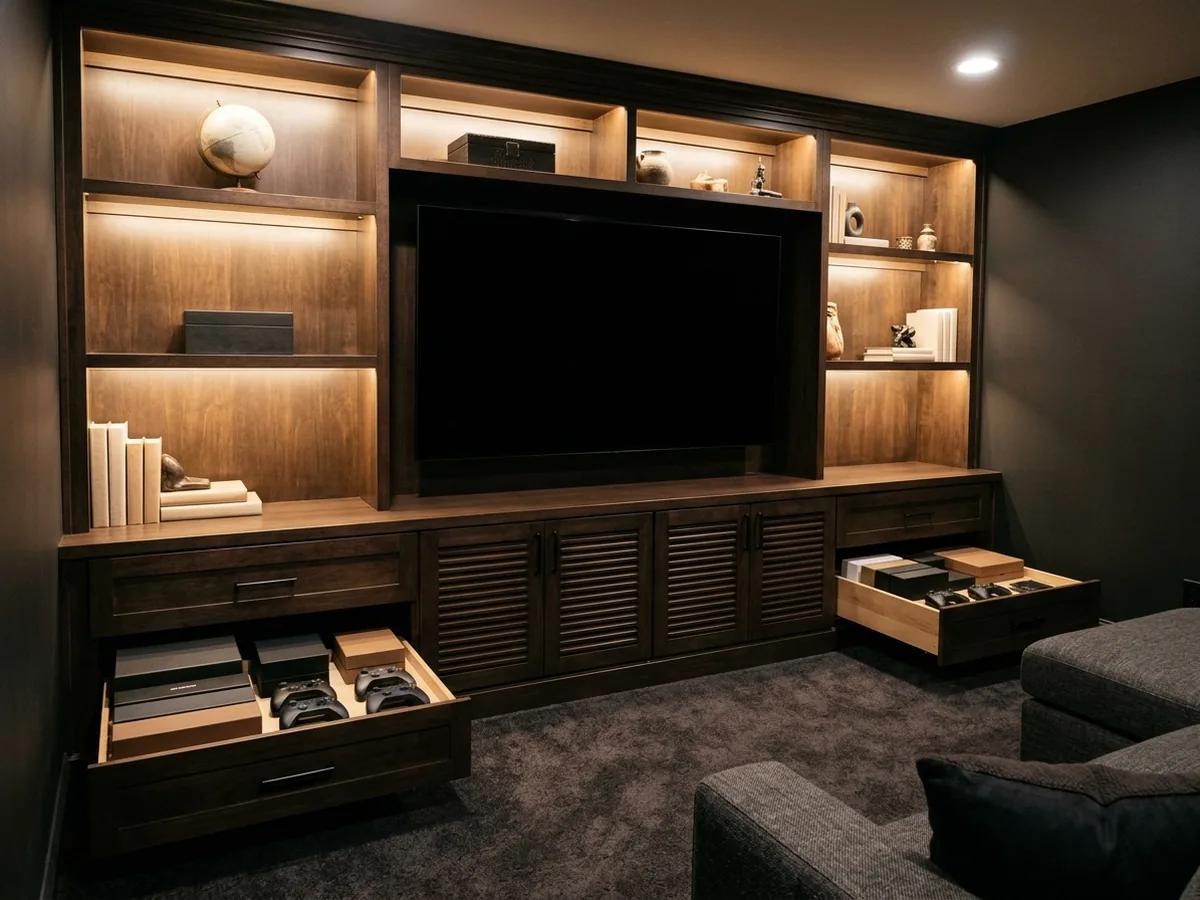
Game Room and Theater Cabinets
When a bonus room or casita becomes the game room, the cabinets there are about volume. Board games and console boxes want wide, shallow drawers on full-extension slides rather than deep shelves where things stack and topple. A projector or large-screen room needs an equipment cabinet with slatted doors and a vent path, and a matte finish reflects less of the screen's light than gloss does. Seating risers, acoustic panels and the screen wall are carpentry and AV work, but the cabinet maker should draw the storage around them. If the room gets a snack counter or under-counter fridge, the wet bar cabinets page covers that run. For the bookshelves that often flank a theater wall, see built-in bookshelves.
Why St. George homeowners call St. George Cabinet Makers
- Estimates are free, and you're under no obligation to hire
- Measured on site and drawn before you commit
- Written price with species, finish and hardware listed
- One local cabinet maker per request, not a call list
- You pay nothing for the referral itself
Desert Humidity and Wood Movement in Built-Ins
St. George air is drier than most cabinet wood is built for. Hourly readings at the city's airport averaged 35% relative humidity over 2021-2025, and June averaged 17%, dropping to about 12% between 1 and 4 in the afternoon. Even December and January, the dampest months, averaged about 53%. That's our math on five years of airport weather-station observations archived by the Iowa Environmental Mesonet, not an official normal.
Wood follows the air. The USDA Forest Products Laboratory's Wood Handbook gives the moisture content wood settles at (its equilibrium moisture content) at 70°F:
| Relative humidity | Wood moisture content |
|---|---|
| 20% | 4.5% |
| 30% | 6.2% |
| 50% | 9.2% |
| 60% | 11.0% |
For the dry Southwest, the handbook's target for interior woodwork at installation is an average 6% moisture content (4% to 9% for individual pieces), against 8% for most of the country, and its map puts southwest Utah in the 6% zone. It notes that air-conditioned rooms in damper climates usually sit at 45% to 55% humidity, which keeps wood at about 8% to 10%. Cabinets built and stored at those levels arrive here carrying extra moisture they will give up.
How much movement is that? Wood moves most across the growth rings, about half as much radially, and barely at all along its length. Using the handbook's coefficient for flat-sawn white oak, a 24-inch solid panel that swings between 6.2% and 9.2% moisture would change width by about a quarter inch (24 x 0.00376 x 3, our arithmetic). Indoor air swings less than outdoor air and a finish slows the exchange, so treat that as an upper bound for a bare board. The handbook's point is that installing it at its in-service moisture content avoids "cracks in furniture," and that varnish or paint slows moisture change but doesn't prevent it.
What to ask for on a media wall:
Acclimation
Where the lumber and panels are stored before building, and whether the maker checks moisture content with a meter.Construction that allows movement
Frame-and-panel doors with floating panels, veneered panels on a stable core for wide surfaces, and fasteners that let solid tops move.Equipment heat
Warm air holds the same water at a lower relative humidity, so the wood around a running receiver dries further. A vent path keeps that bay closer to the rest of the room.
The same numbers apply to every cabinet in the house; inset doors on a custom kitchen are the other place they show.
Entertainment Center Cost and the Drawing to Ask For
Fixr's national estimates put a built-in entertainment center at $5,000 to $15,000, with $9,000 typical for a full wall of solid wood with shelving, cabinets and a TV mount. Between the floating and full-wall figures given above, Fixr puts standard units at $2,000 to $12,000 and corner units at $3,000 to $15,000. Angi's built-in cabinet figures are $200 to $600 per linear foot, with labor at 30% to 50% of the total. On that basis a 14-foot media wall comes to roughly $2,800 to $8,400 (our arithmetic), before lighting or wiring. Angi's typical figure for an entertainment center alone is about $4,000, and it estimates installation at two days for a small built-in and a week or more for a large custom one. The spread between those sources is mostly scope: a console and two shelves is a different job from a wall of doors, drawers and lighting.
The drawing should show the TV's model, screen size and mount; each piece of equipment with its dimensions; the vent path; the cable chase or conduit; outlet and low-voltage locations and who installs them; fireplace clearances taken from its manual; shelf spans; species and finish; and how the units fasten to the wall. Once you call, the request goes to a single maker, who measures the wall and prices it from those drawings.