
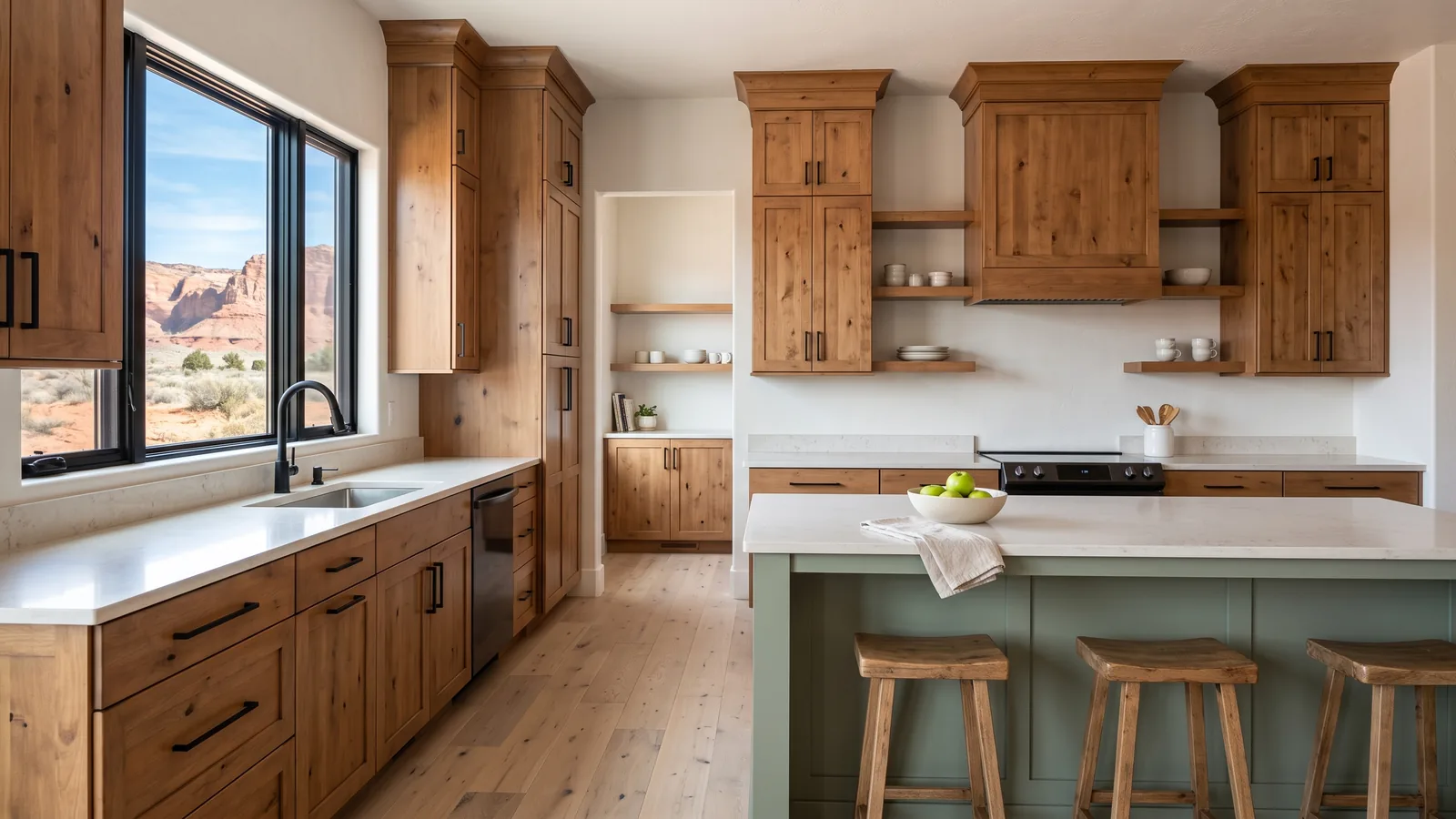
Cabinet Refinishing Methods
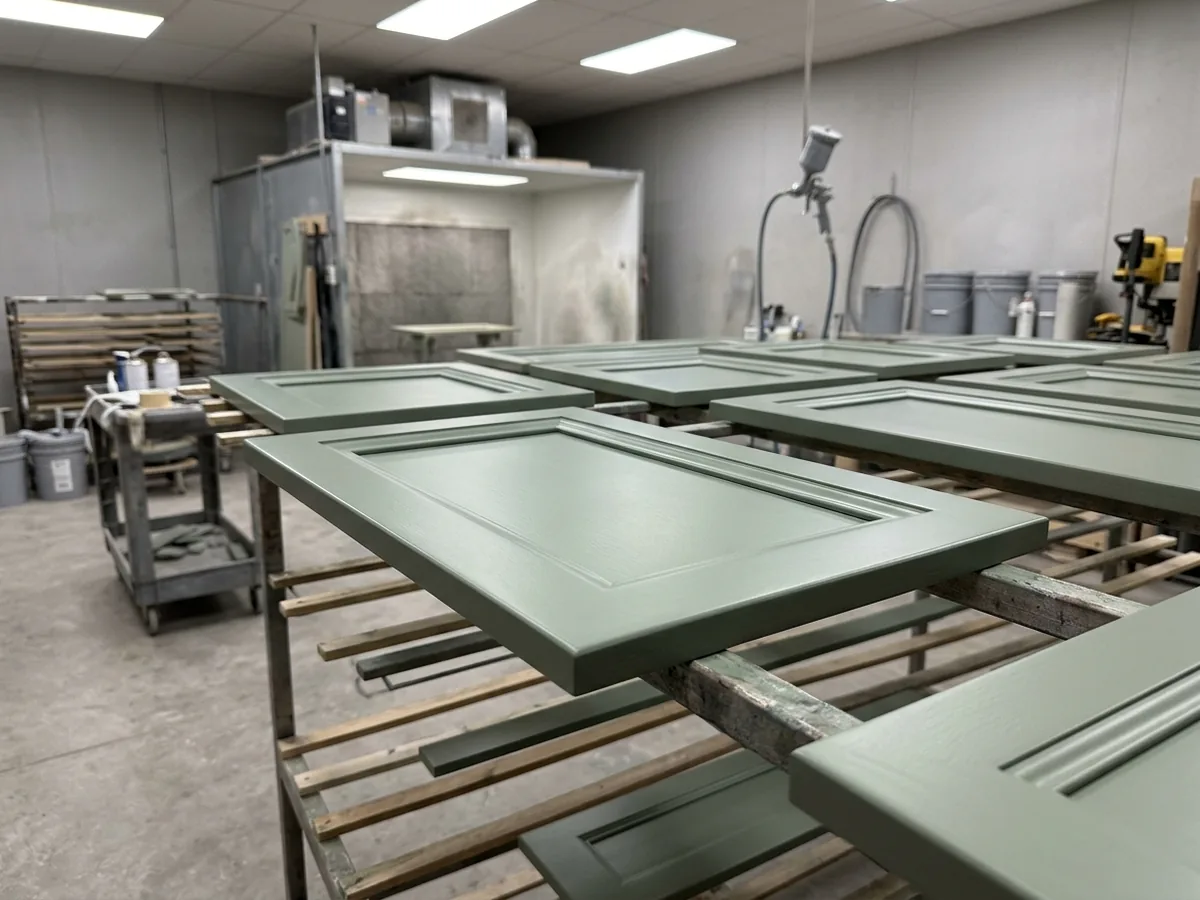
Sprayed Paint Finishes
Painting is the most-asked-for refinish, and spraying is what separates a factory-looking result from a brushed one. Doors and drawer fronts go to the shop or a booth, where they're sanded, primed and sprayed flat on racks. The boxes are masked and sprayed in place. A sprayed finish lays down evenly over the inside corners of a shaker door, where a brush leaves ridges. HomeGuide puts professional cabinet painting at $30 to $70 per linear foot, or $2,000 to $6,500 for an average kitchen, and spraying at $40 to $100 per linear foot. Paint hides most of the grain, which is why it suits maple and MDF. On oak, the open pores can still telegraph through unless they're filled first.
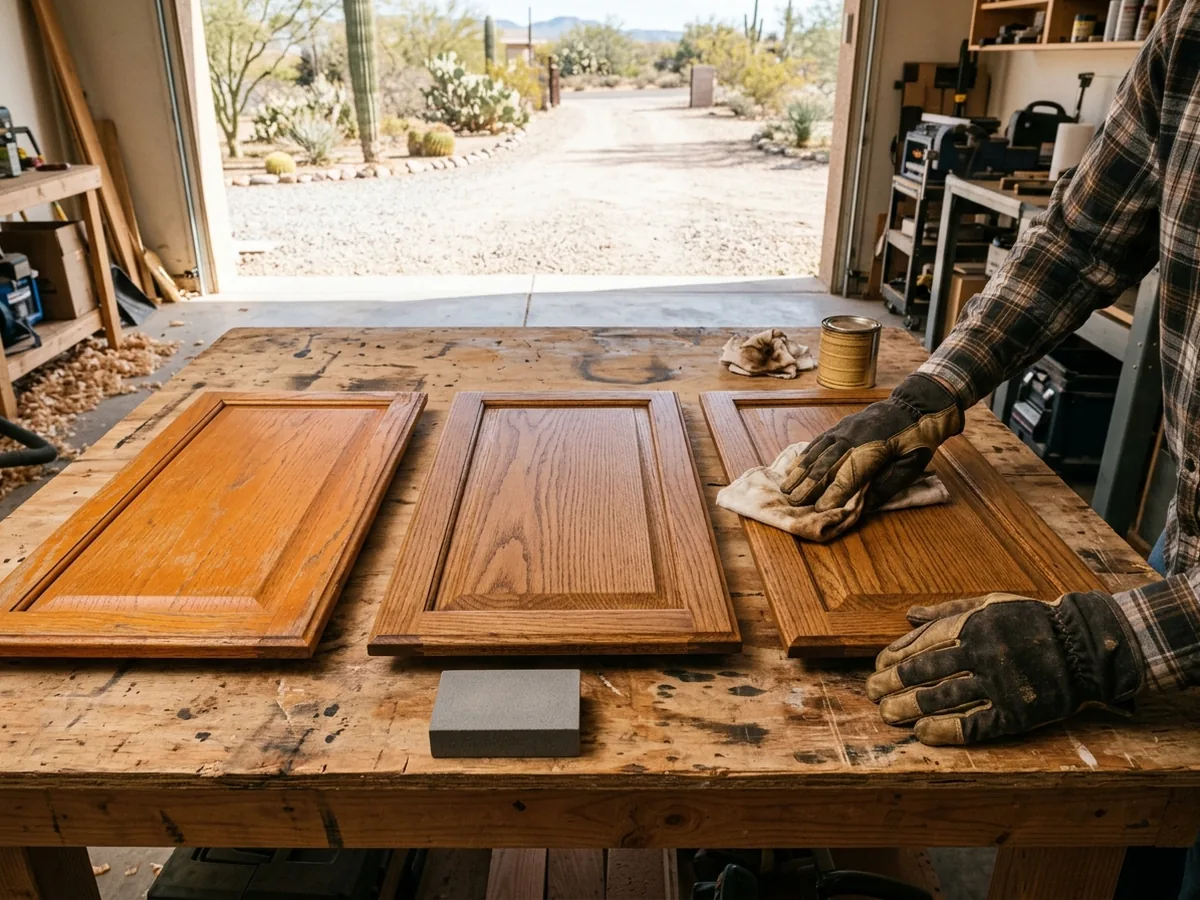
Restaining and Toning
Restaining keeps the grain visible and changes the color. It's harder than painting: the old finish has to come off down to bare wood, by stripping and sanding, before new stain will soak in evenly. Going darker is easier than going lighter. A toner, which is a tinted clear coat sprayed over the stain, can even out a color without as much stripping. HomeGuide notes that staining only works on solid wood or wood veneer and is limited to wood tones, and it puts the cost at $4 to $15 per sq ft, or $1,500 to $4,500 for an average kitchen. Honey oak from the 1990s is the classic candidate.
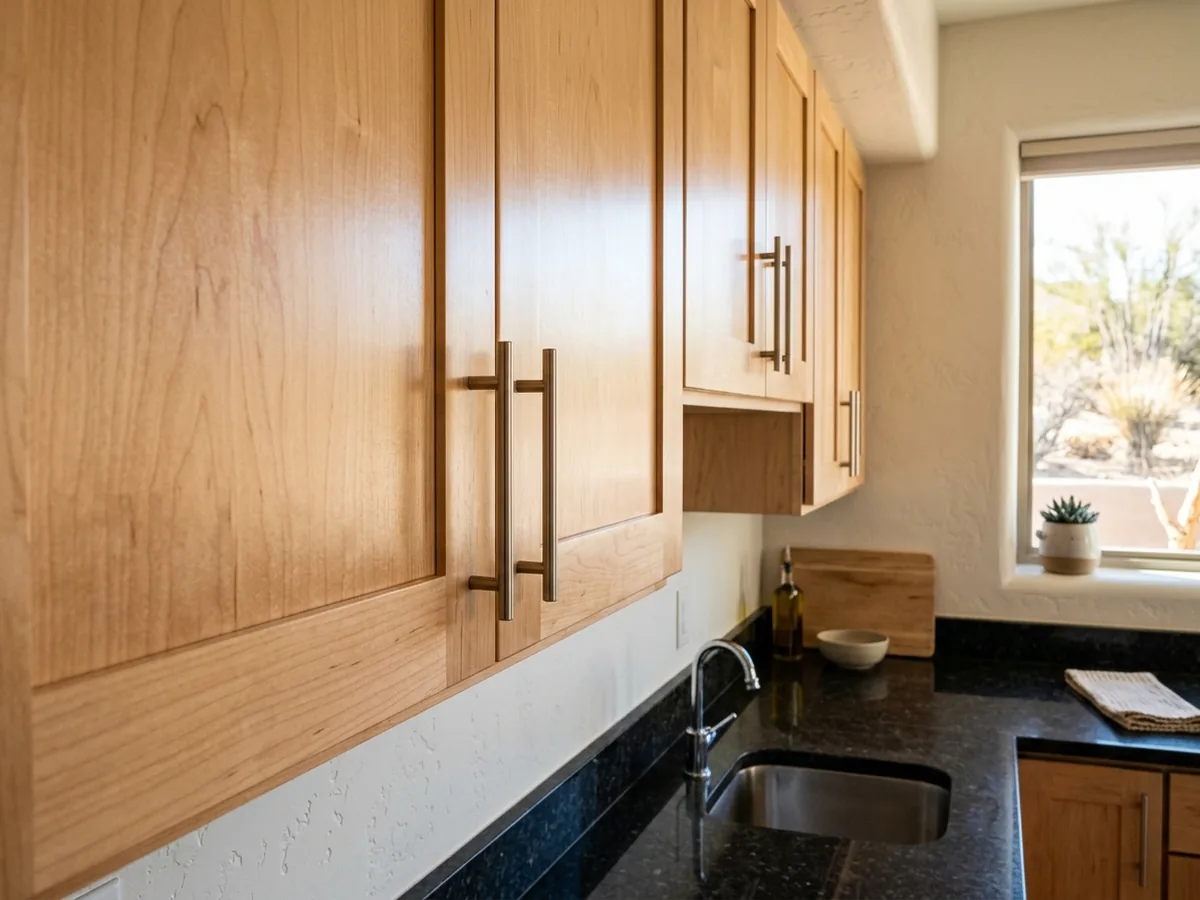
Clear-Coat Refresh
When the color is fine but the finish is worn, a clear-coat refresh is the lightest job. The cabinets are cleaned of grease, scuff-sanded, touched up where the wood shows, and given a new clear topcoat. It works on cabinets whose finish has dulled around the handles or the sink but hasn't failed. If the old finish is peeling or cracking, a new coat on top won't hold, and the job becomes a full strip. Ask what the new topcoat is and whether it's compatible with the old one. A catalyzed finish such as conversion varnish cures harder and resists water and household chemicals better than a brushed varnish.
Two-Tone Refinishing
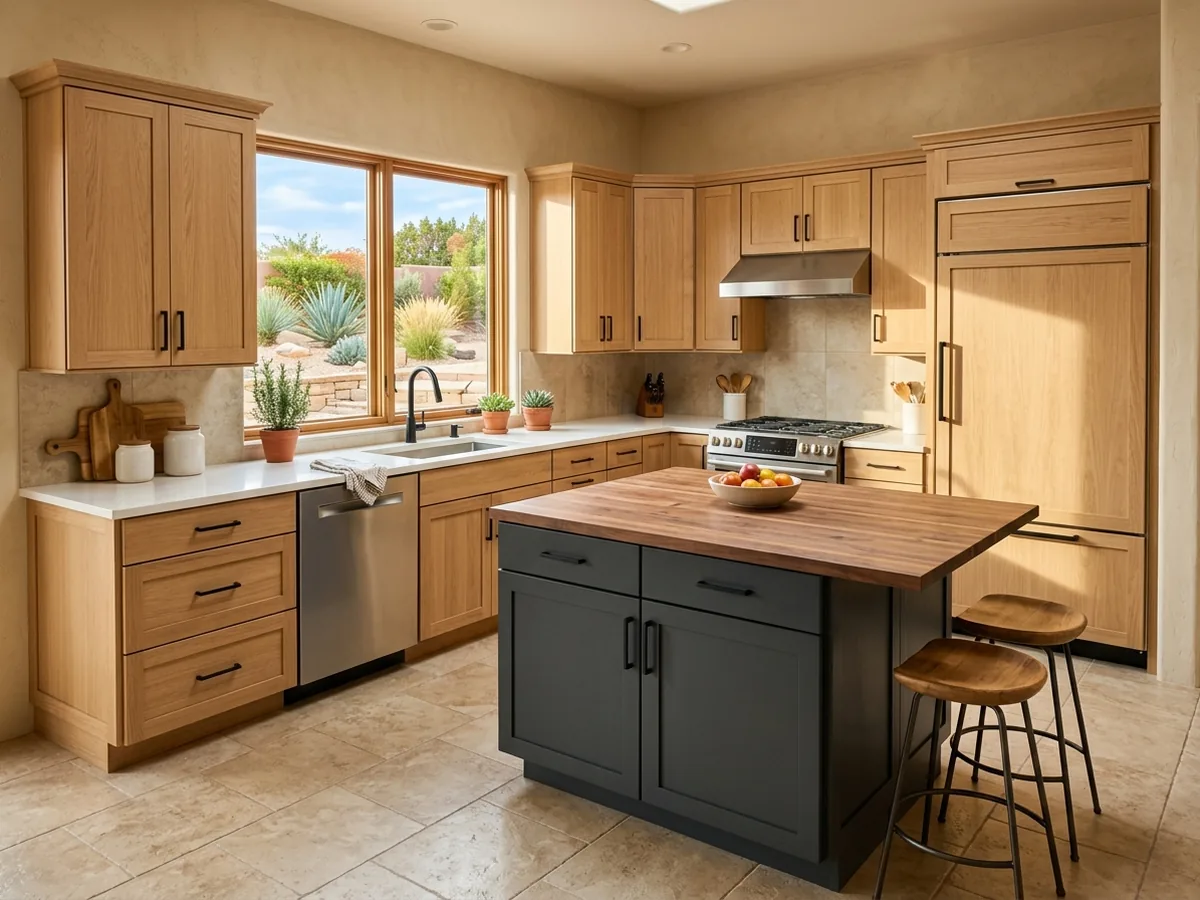
Two-tone refinishing paints one part of the kitchen and stains or clears the rest. The common split is a painted island against wood perimeter cabinets, or dark lowers with light uppers. It's a way to update a kitchen without painting over every bit of wood. The line between colors has to fall where cabinets naturally break, at the end of a run or at the island, not halfway along a wall. Each zone gets its own prep and finish schedule, so expect the quote to price them separately. If the wood half is oak or maple you're keeping natural, a clear-coat refresh on that half and paint on the rest is often the cheapest version.
Why St. George homeowners call St. George Cabinet Makers
- Estimates are free, and you're under no obligation to hire
- Measured on site and drawn before you commit
- Written price with species, finish and hardware listed
- One local cabinet maker per request, not a call list
- You pay nothing for the referral itself
Lead Paint Rules for Refinishing Older Cabinets
Sanding painted cabinets in an older house can release lead dust. The EPA's Renovation, Repair and Painting (RRP) rule applies to paid work that disturbs painted surfaces in homes built before 1978, and it requires the firm to be certified and its workers trained in lead-safe practices. EPA says about three-quarters of U.S. homes built before 1978 still contain some lead-based paint. Utah runs its own program: the Utah Department of Environmental Quality certifies RRP firms and individuals working here.
The rule has a small-job threshold. Work that disturbs 6 sq ft or less of painted surface per room indoors counts as minor repair, but when painted parts are removed, the whole removed surface counts. Stripping a set of painted kitchen doors is well over 6 sq ft. If your house predates 1978 and the cabinets have ever been painted, ask for the RRP certification before work starts.
Most St. George houses are newer. Only about 9% of the city's homes were built before 1980, so this matters for a minority of jobs. For those, it matters a lot.
Painted Cabinets in a Dry Climate
Paint is a stiff skin over a material that moves. The USDA Wood Handbook says wood shrinks as it dries and swells as it picks up moisture, and that paint, varnish and lacquer slow that exchange without stopping it. On a painted shaker door, the joint where the rails meet the stiles is where you'll see it: a hairline crack in the paint once the wood shrinks a little in a dry summer. St. George air is dry most of the year (the entertainment centers page has the humidity data). A good refinisher will tell you up front that those joint lines can appear, and won't promise they never will. A new finish also won't close gaps that are already there from shrinkage.
Refinish, Reface or Replace
Refinishing is the cheapest of the three because nothing new is built. HomeGuide's national ranges for an average kitchen are $1,500 to $4,500 to restain, $5,000 to $13,000 to reface and $4,500 to $15,000 to replace. Refinishing makes sense when the boxes are solid, the doors are a style you can live with, and the layout works. Cabinet refacing adds new doors and drawer fronts over the old boxes, for when the door style is the problem. New cabinets are the answer when boxes are water-damaged or the layout has to change. Check under the sink first: HomeGuide advises confirming there's no water damage before refinishing bathroom cabinets, and a swollen sink base is a cabinet repair job before it's a paint job.
What a Refinishing Quote Should Spell Out
the method for each area
Paint, stain, toner or clear coatprep steps
Degreasing, sanding, stripping, filling grain or dents- primer and topcoat by product name and type (waterborne, catalyzed lacquer, conversion varnish)
- sheen, and whether doors are sprayed off site or in the house
- how the boxes, counters, floors and walls are masked and protected
- interiors included or not, and how many coats
- whether hinges and pulls go back on or get replaced, and the hardware model if new
- for a pre-1978 house, the RRP firm certification number
- dry time before the kitchen is usable, and touch-up terms in writing