Built-In Bookshelves and Bookcases, Room by Room
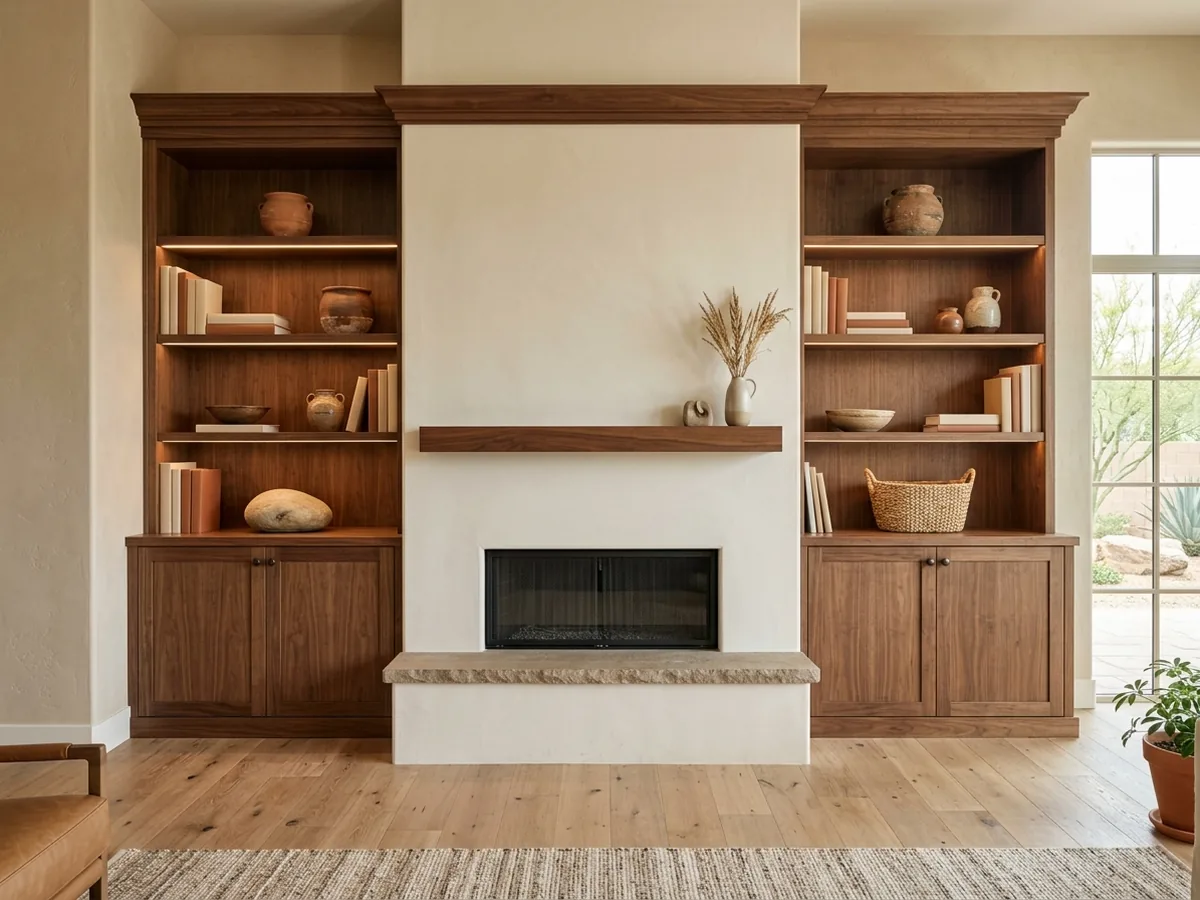
Fireplace-Flanking Bookcases
A pair of bookcases on either side of a fireplace turns a great room's empty corners into storage and makes the fireplace the center of the wall. The usual build is closed base cabinets for games and cords, a top at about the height of the hearth or mantel, and open shelves above with a crown that lines up across the whole wall. Picture lights or LED strips under each shelf are easiest to wire before the backs go on. How close the wood can come to the firebox is a code question, covered further down.
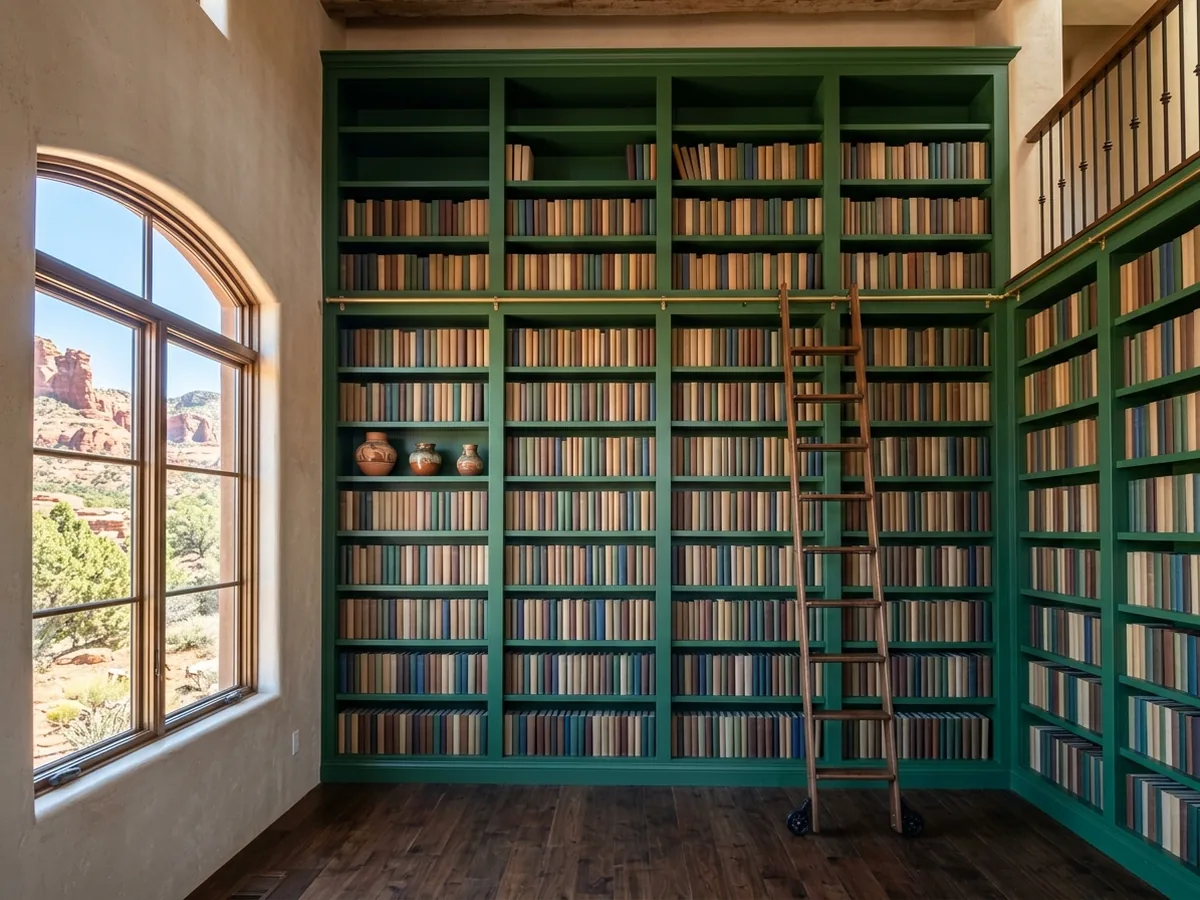
Wall-to-Wall Library Shelving
A full library wall runs floor to ceiling and corner to corner, with vertical dividers at regular spacing and a rolling ladder on a rail for the top rows. Book shelves don't need kitchen depth. HomeGuide gives standard shelving as 10 to 12 in. deep and 8 ft tall or less. Lower shelves can be deeper for art books and records. A face frame or applied stiles across the front hide the shelf ends and stiffen the case. Mix adjustable shelves on pins with a few fixed shelves glued into dadoes, which lock the sides together and keep a tall case from racking.
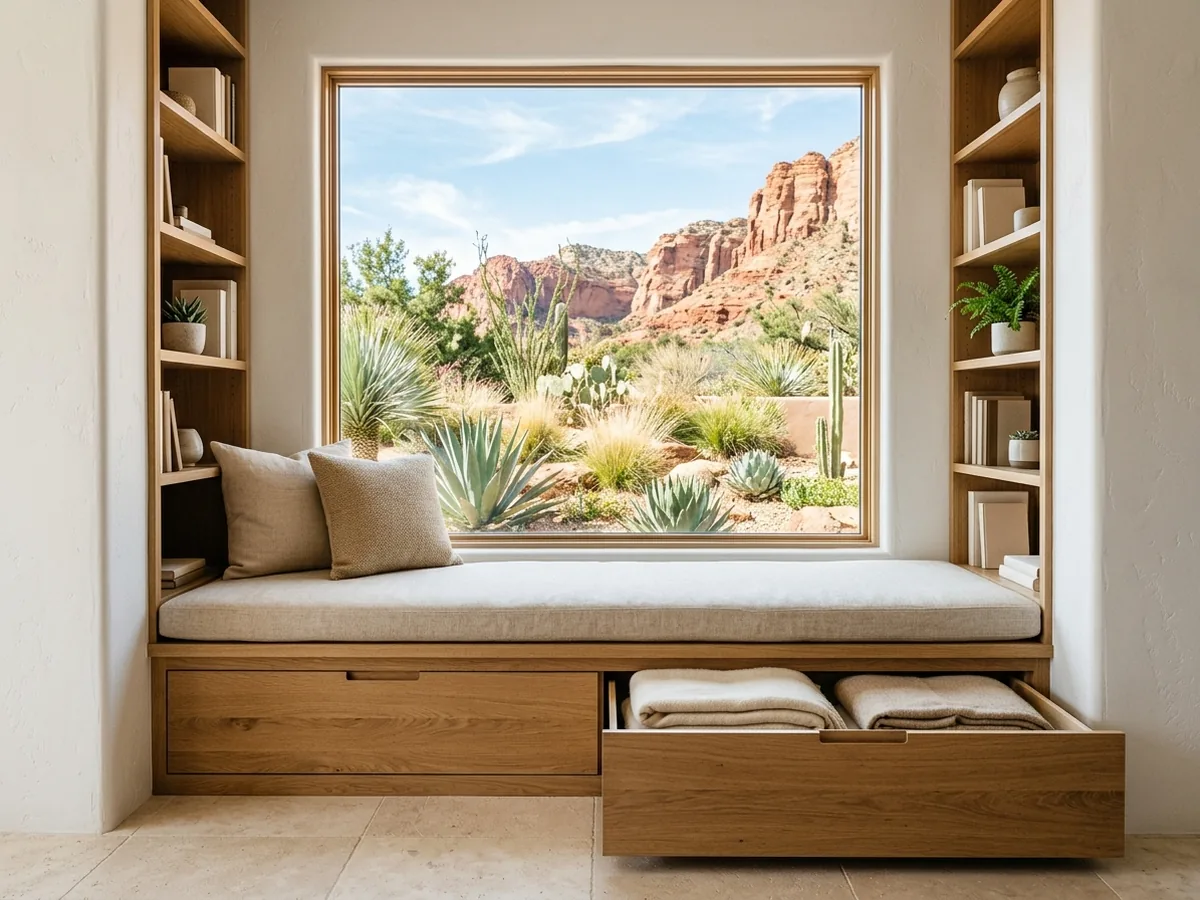
Window Seats with Storage
A window seat between two bookcases makes a reading nook out of a wall that would otherwise hold a single chair. Storage underneath can be drawers, which open even with someone sitting there, or a hinged lid, which is cheaper but means everyone gets up. Ask for a seat deep enough to sit in with a cushion and pillows behind you, and deeper still if you want to lie down. West-facing glass gets hard afternoon sun here, so pick a cushion fabric and wood finish that can take it (sun and UV on finishes are covered under outdoor kitchen cabinets).
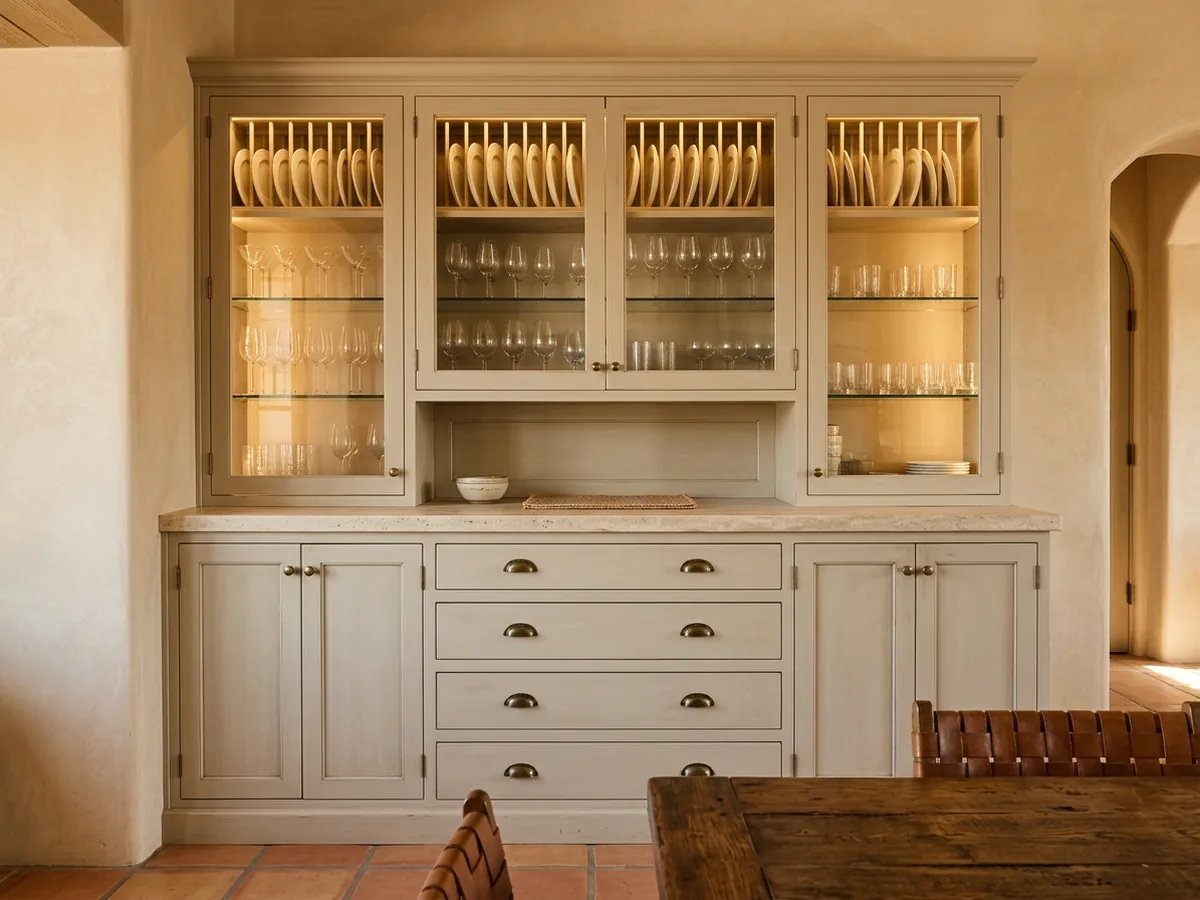
Dining Room Built-In Hutches
A built-in hutch gives a dining room what a freestanding china cabinet does, without the gap at the wall or the tipping risk. Below: drawers for linens and flatware, often with felt-lined dividers, and doors for serving platters. On top: a stone or wood serving counter. Above: glass-door uppers with plate grooves cut into the shelves, lit from inside. Building the counter a little lower and the uppers a little shallower than kitchen cabinets helps the piece read as furniture.
Why St. George homeowners call St. George Cabinet Makers
- Estimates are free, and you're under no obligation to hire
- Measured on site and drawn before you commit
- Written price with species, finish and hardware listed
- One local cabinet maker per request, not a call list
- You pay nothing for the referral itself
Built-In Bookshelf Sag: Span, Thickness and Edge
Books are heavy, and a shelf that bows is the first thing anyone notices. The Sagulator, a shelf calculator built on Forest Products Laboratory stiffness data, sets a target of 0.02 in. of sag per foot of span or less. It notes that the eye picks up about 1/32 in. per running foot, or roughly 3/32 in. across a 3-ft shelf. Its rules of thumb show why span matters most:
- Make a shelf a quarter longer and it sags twice as much.
- Double the span and sag goes up eight times.
- Double the thickness and sag drops to one-eighth.
- Double the depth and sag is cut in half.
Many bookshelves run 24 to 36 in. wide and ¾ to 1 in. thick. HomeGuide notes that MDF shelves are cheaper but may sag under heavy books. A good cabinet maker will size each span for books, not knick-knacks, and glue a hardwood strip to the front edge of long shelves.
How Built-In Bookcases Are Fitted to the Room
A built-in looks built-in because it is scribed to the room. Walls bow, floors dip and ceilings wander, so the end panels and the top molding get extra width that is trimmed to follow the wall and ceiling exactly. The base sits on a separate leveled platform or toe kick, so the cases above stay plumb even on a floor that isn't flat. Each case is screwed to the studs through a hanging strip at the back. That keeps a tall bookcase from tipping and pulls the run tight to the wall. Backs are often ¼-in. or ½-in. plywood. The thicker back stiffens the case and gives you something to screw a picture light or a TV mount into. Cord holes and outlets for lamps belong on the drawing, not cut in afterward.
Fireplace Built-Ins and Code Clearances
For a masonry fireplace, the 2021 IRC that Utah adopts sets how close wood may come. Combustible mantels and trim can't sit within 6 in. of the fireplace opening. Within 12 in., anything combustible can project no more than ⅛ in. for every inch it is from the opening. A shelf edge 8 in. from the opening can stick out 1 in. at most. Factory-built fireplaces must be listed and installed according to that listing. The unit's installation manual sets the clearances there, so ask the maker to work from it. Heat and dry air also move wood; the entertainment centers page explains how panels are built to allow for it.
Built-In Bookcase Costs, Line by Line
HomeGuide puts built-in bookshelves at $300 to $850 per linear foot installed, or $2,000 to $7,500 for a typical job. Its other figures, all national estimates:
| Item | HomeGuide range |
|---|---|
| Custom built-ins, per linear foot | $400 to $1,000+ |
| Built-ins around a fireplace | $1,000 to $8,000 |
| Built-ins around a window | $2,000 to $8,000 |
| Each drawer added | $100 to $250 |
| Cabinet doors, per set | $100 to $200 wood, up to $400 glass |
HomeGuide adds 20% to 50% for shelving taller than 8 ft, deeper than standard or floor-to-ceiling. Ask for the drawing to show every shelf thickness and span, which shelves are fixed, the species or paint, the lighting, and how the cases are anchored. For narrower walls, floating shelves skip the case entirely, and a hidden door bookcase turns one section into a door.