
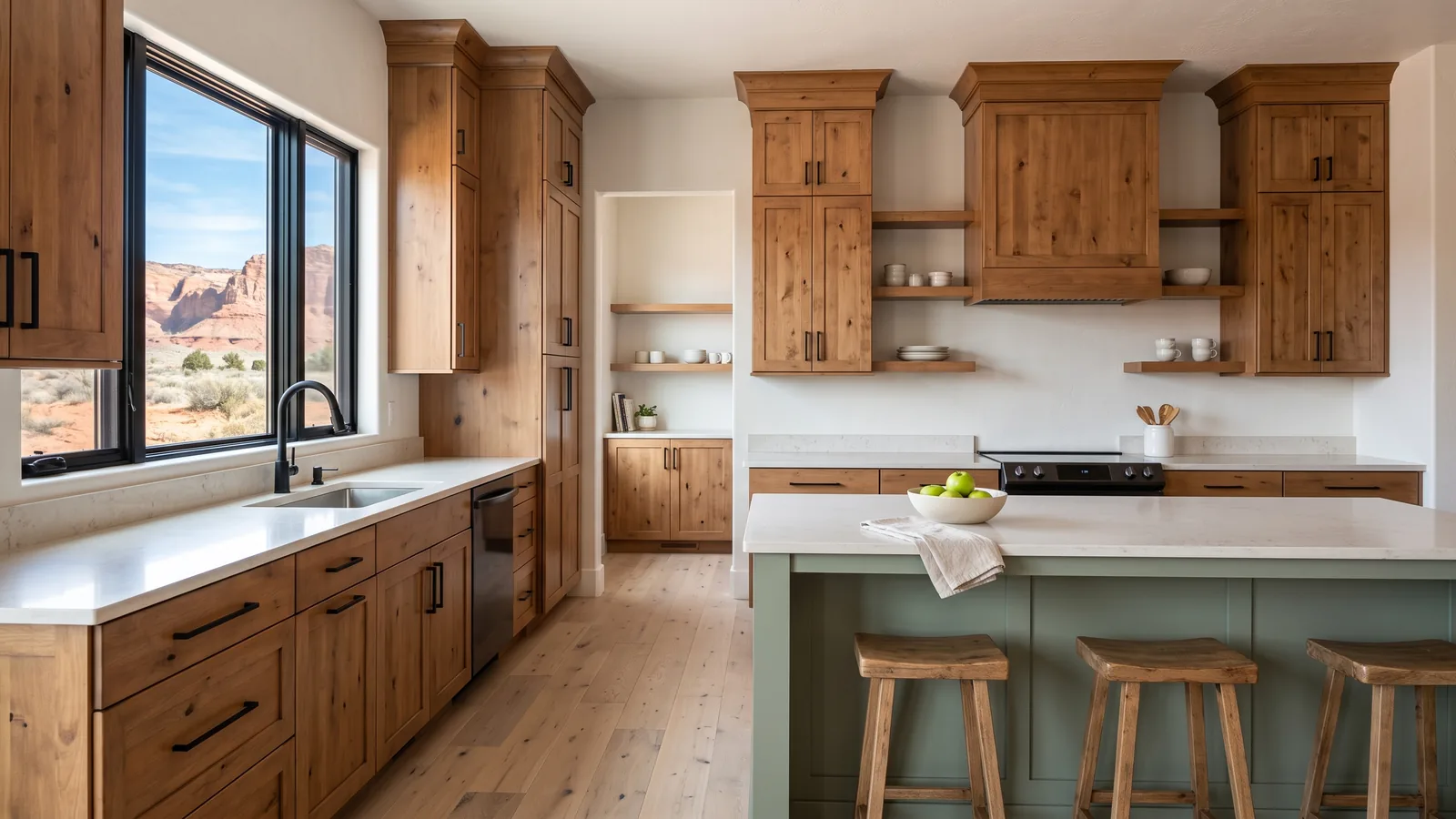
Custom Range Hood Styles
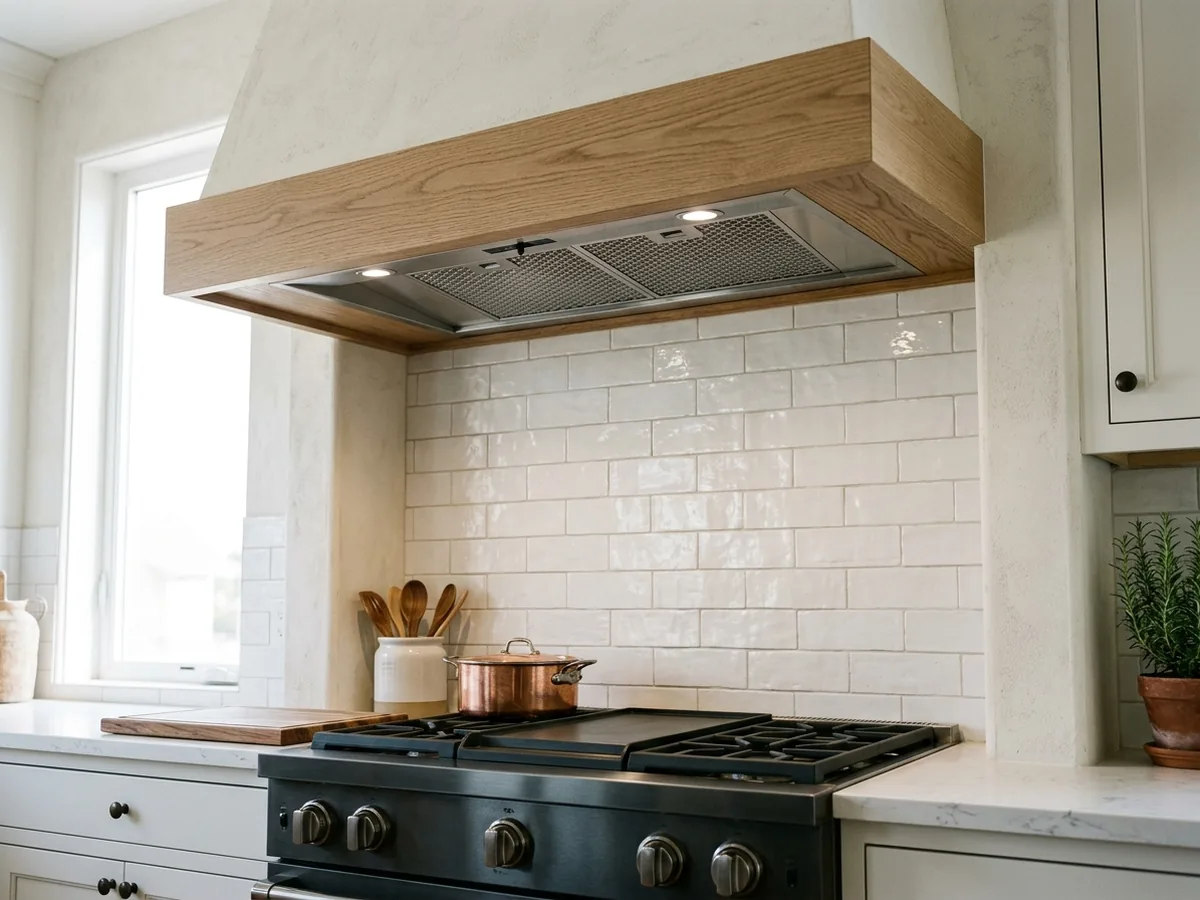
Wood Hood Covers over an Insert
Most custom hoods are a wood cover built around a hood insert. KitchenAid's inserts, for example, run from 28 to 60 in. wide and are made to tuck inside custom cabinetry or a cover. The insert is the appliance: it's listed for the job, it carries the fan and filters, and its install manual sets the clearances. The cover is cabinetry built to those numbers. A good cover leaves the insert's filters and light bulbs reachable from below and the fan reachable for service, often through a removable panel. The duct runs up inside the cover to the outside. Pick the insert before the cover is drawn, because the cover is sized around it.
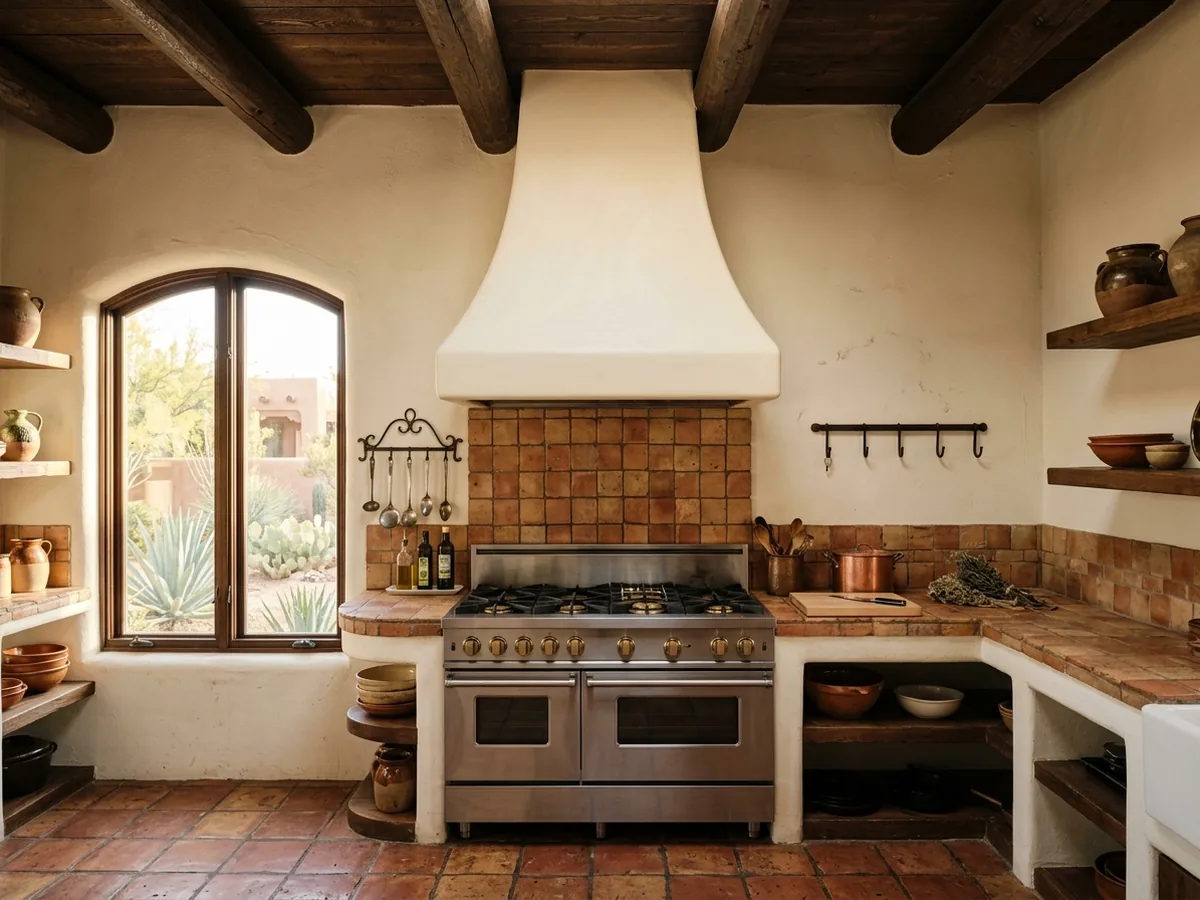
Smooth Painted Hoods
The smooth hood is a tapered or curved shape with no visible joints, painted to look like plaster. It's usually framed and skinned in MDF or bendable plywood, then filled and sprayed so the seams disappear. It suits a modern or Spanish-style kitchen, where a stained wood box would look heavy. The taper is what makes it look right. Ask for a side elevation, because a hood that's too shallow at the bottom won't cover the front burners. Paint near a cooktop needs a hard, washable finish, since grease lands on it daily.
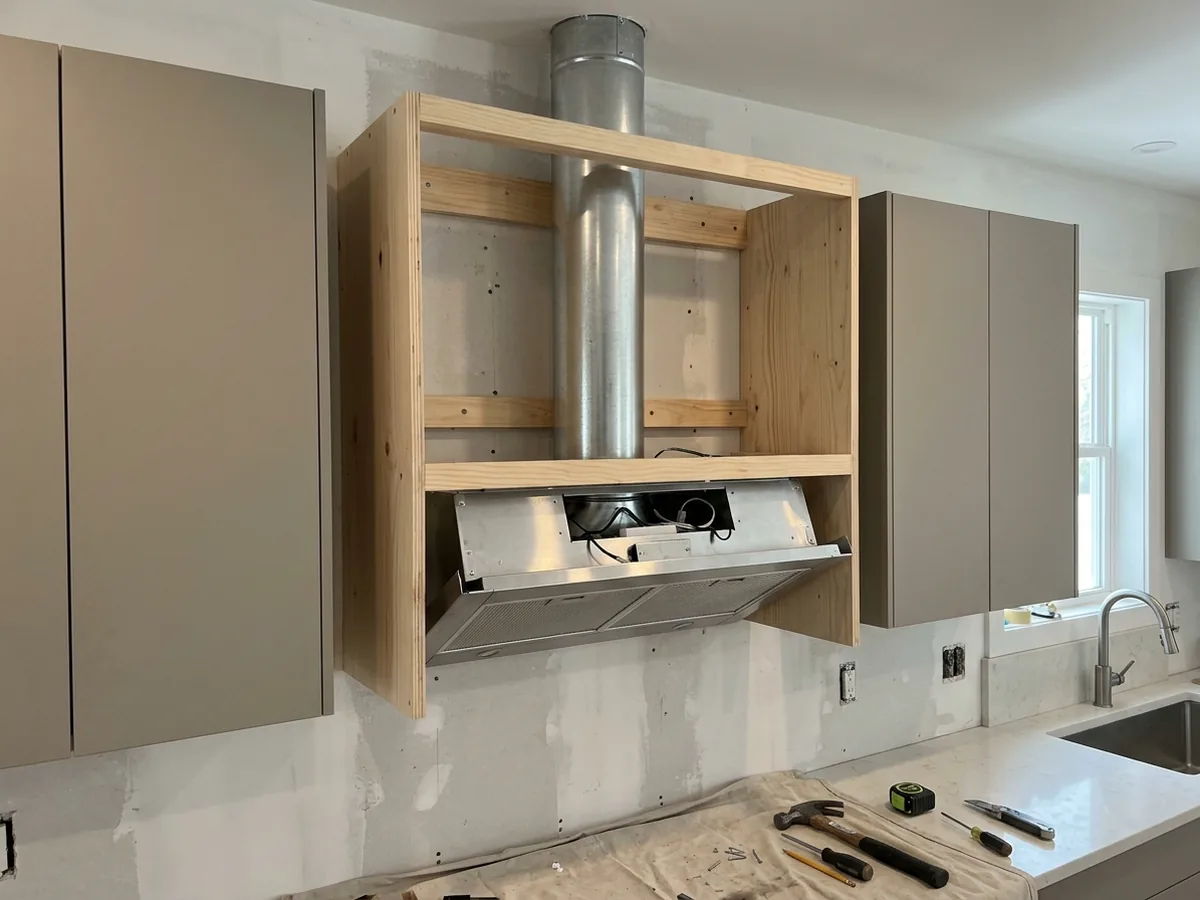
Chimney and Box Hoods
A box or chimney hood has straight sides running up to the ceiling or to a soffit. It's the simplest to build, the easiest to fit around a duct, and the style that works best with flat slab cabinets. Inside, wood strapping or a frame holds the insert and ties the hood to studs or ceiling joists, because the cover and insert together are heavy. If the hood stops below the ceiling, the top needs a closed cap. If it runs to the ceiling, the duct stays hidden all the way up. Box hoods are also easy to clad in tile or metal on the face if you want a different look than the cabinets.
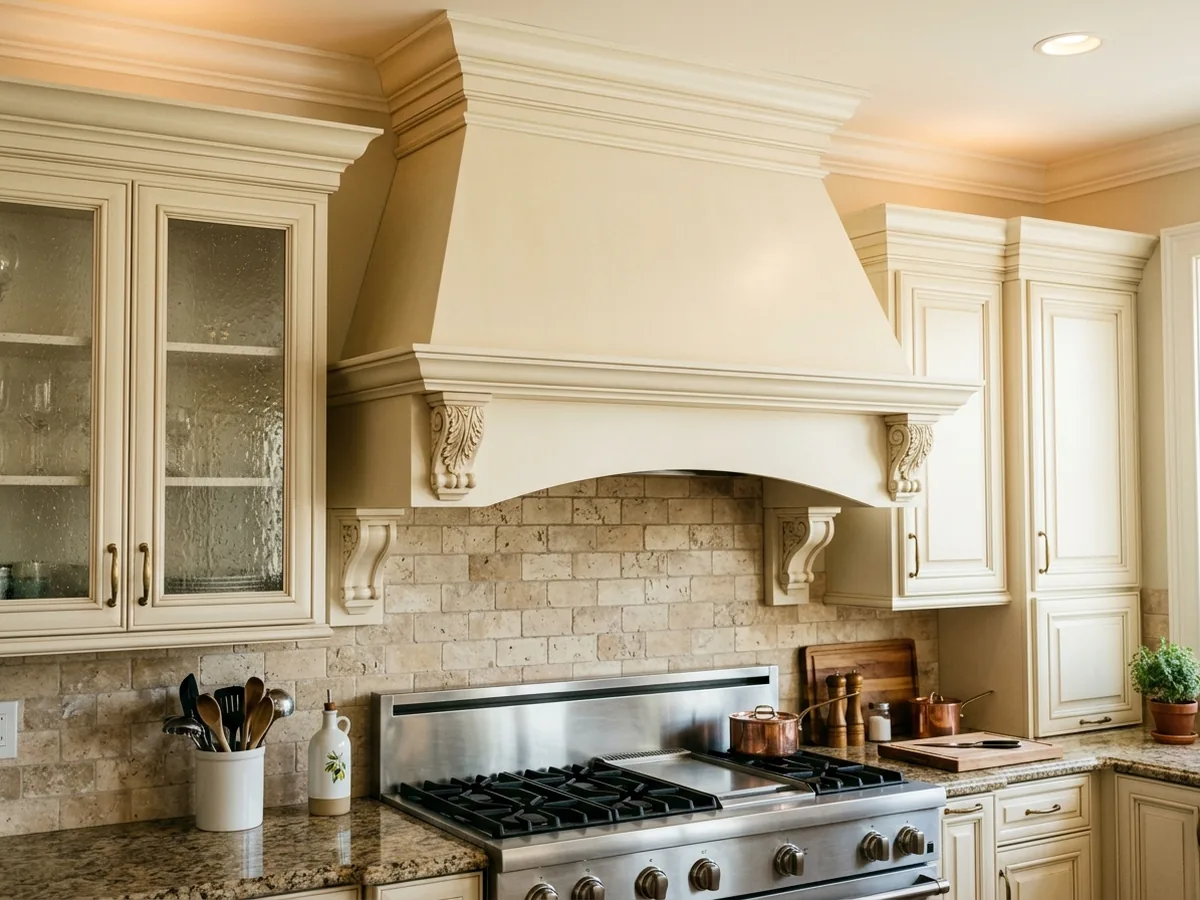
Hoods with Crown and Corbels
The traditional hood gets a mantel shelf at the bottom edge, stacked crown at the top, and corbels or brackets under each side. It pairs with raised-panel or shaker cabinets and matching crown along the uppers. This is where finish carpentry shows: the crown has to line up with the cabinet crown on both sides, and the miters have to close. Corbels are decorative. They shouldn't be what holds the hood up. Keep anything that sticks out, like a mantel shelf, at the clearance the insert's manual calls for, and don't store things on a shelf right over the burners.
Why St. George homeowners call St. George Cabinet Makers
- Estimates are free, and you're under no obligation to hire
- Measured on site and drawn before you commit
- Written price with species, finish and hardware listed
- One local cabinet maker per request, not a call list
- You pay nothing for the referral itself
Range Hood Code: Ducts, Clearances and Makeup Air
Utah adopts the 2021 International Residential Code, and the state's amendments don't change its kitchen exhaust section, M1503. Here's what it requires:
Discharge outdoors
A ducted hood has to exhaust outside through a smooth, airtight duct with a backdraft damper, not into an attic or crawl space. Listed ductless hoods are allowed when installed per the manufacturer.Duct material
Galvanized steel, stainless steel or copper. Foil or plastic flex duct hidden inside a wood cover isn't on that list.Makeup air over 400 cfm
If the house has a fuel-burning appliance inside its air barrier that is neither direct-vent nor mechanical-draft, any exhaust system that can move more than 400 cfm needs makeup air at about the same rate, with a damper that opens automatically when the hood runs. Ask the HVAC contractor or the building department whether your house triggers it before you choose a big fan.Minimum exhaust
The code's local exhaust table calls for at least 100 cfm intermittent in a kitchen.
Clearance matters for a wood cover. For gas cooking appliances, the 2021 IRC requires 30 in. between a cooking surface and combustible material above it, or 24 in. with listed protection or a metal hood as described in G2447.5. KitchenAid recommends mounting a hood 24 to 30 in. over a gas cooktop, 20 to 24 in. over electric and 18 to 22 in. over induction, and a hood the same width as the cooktop. The insert's own manual is the final word.
What a Custom Hood Costs
HomeGuide's national range for replacing a range hood on existing ductwork is $300 to $850; a new hood with a new outlet and ductwork runs $650 to $2,100, and a concealed cabinet-style insert $500 to $1,500 installed. Venting adds more: $200 to $650 through an outside wall, $400 to $900 through the roof of a one-story house and $1,000 to $2,000 for a two-story. A mechanical permit typically costs $100 to $230. The wood cover itself is priced as cabinetry on top of those figures, and stacked crown, corbels and a smooth painted finish all add labor.
Most home hoods are 300 to 700 cfm, HomeGuide says. The jump past 400 is where makeup air can enter the picture, so fan size is a cost decision too.
Hood Drawing Checklist
- insert make, model, width and cfm, and its required mounting height
- cover width, height, depth at the bottom edge, and finish
- duct size, route and termination (wall cap or roof jack), and who installs it
- makeup-air answer from the HVAC contractor or city, if the fan is over 400 cfm
- access panel for the fan and the insert's wiring
- crown, mantel shelf and corbel profiles, and how they meet the cabinet crown
electrical
A dedicated circuit if the insert's manual calls for one
A hood is usually drawn with the rest of the kitchen. See custom kitchen cabinets for the cabinet side, and kitchen islands if the cooktop sits in an island.