
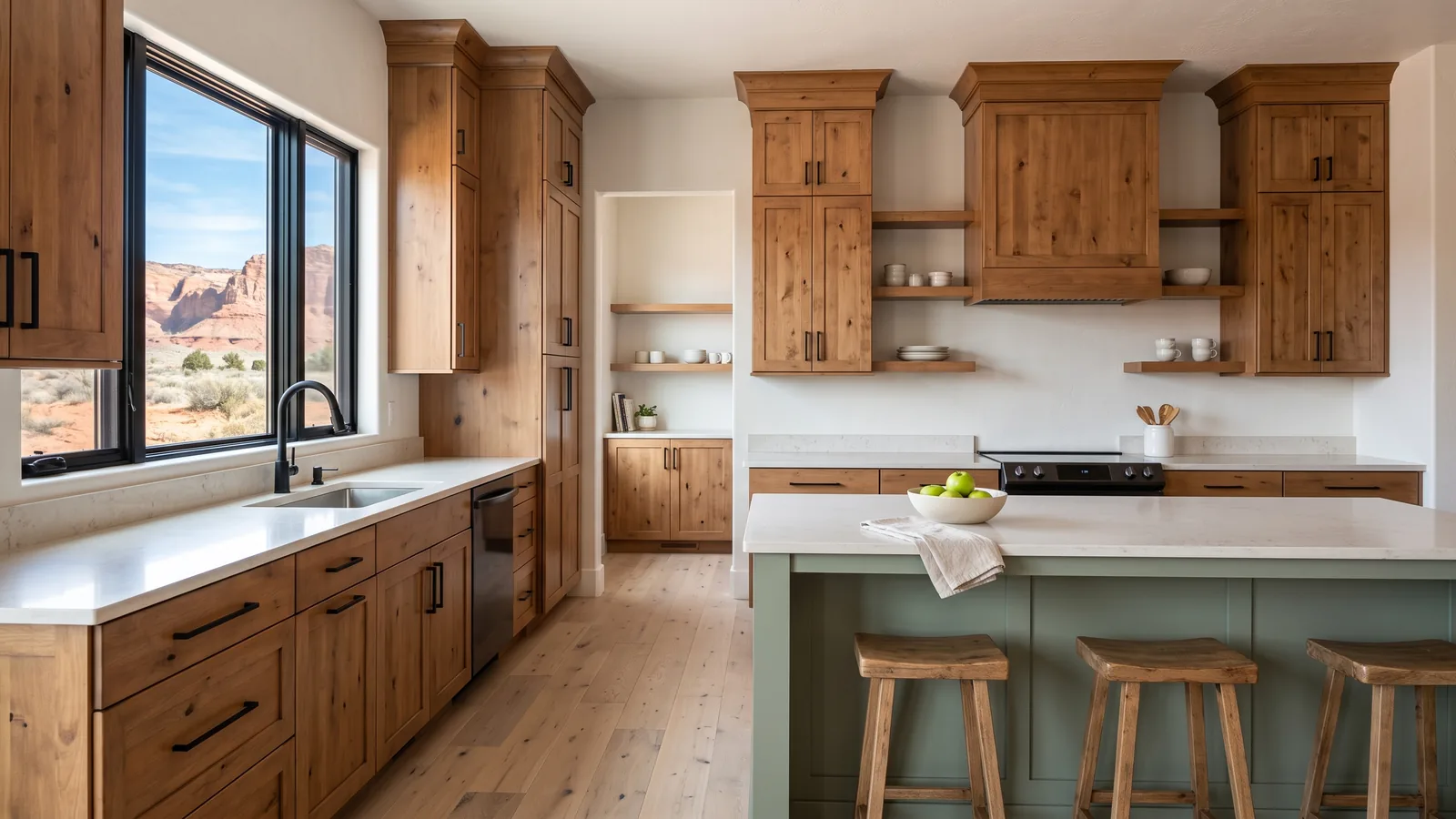
Kitchen Cabinet Repair, Part by Part
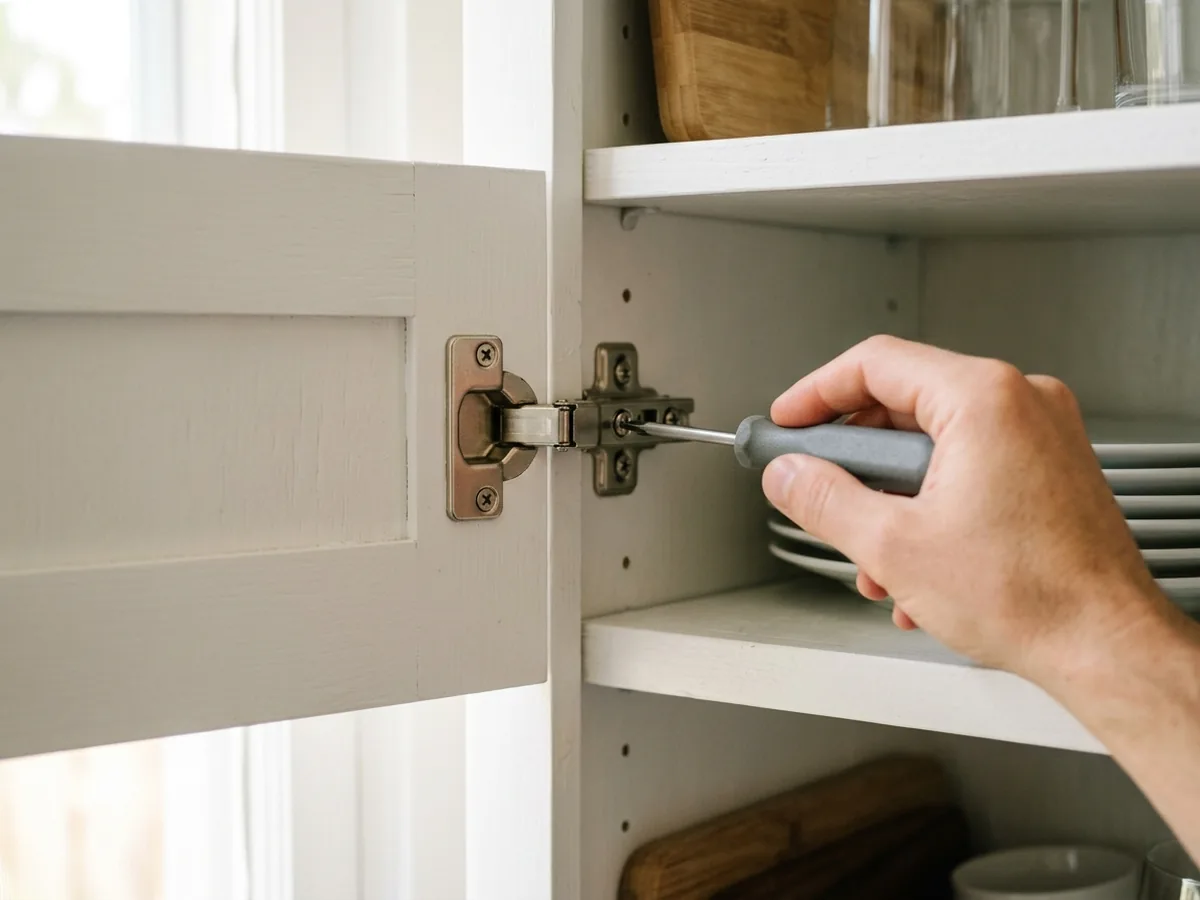
Hinge and Door Repair
A door that hangs crooked usually needs adjusting, not replacing. Concealed "Euro" hinges have a cup in the door, an arm, and a mounting plate on the cabinet side, and most can be adjusted in place with screws: in and out from the cabinet face, up and down, and side to side. If adjustment doesn't help, look at the screws. In particleboard, hinge screws strip their holes, and the fix is to fill and redrill or move the plate onto fresh material. HomeGuide puts hinge replacement at $30 to $80 per hinge. When you replace hinges, match the overlay (how far the door covers the frame) or the gaps will change. Seasonal movement plays a part here too. Wood shrinks as it dries, so after a dry St. George summer a solid-wood door can drift a little out of line. A small turn of the adjustment screws is routine upkeep.
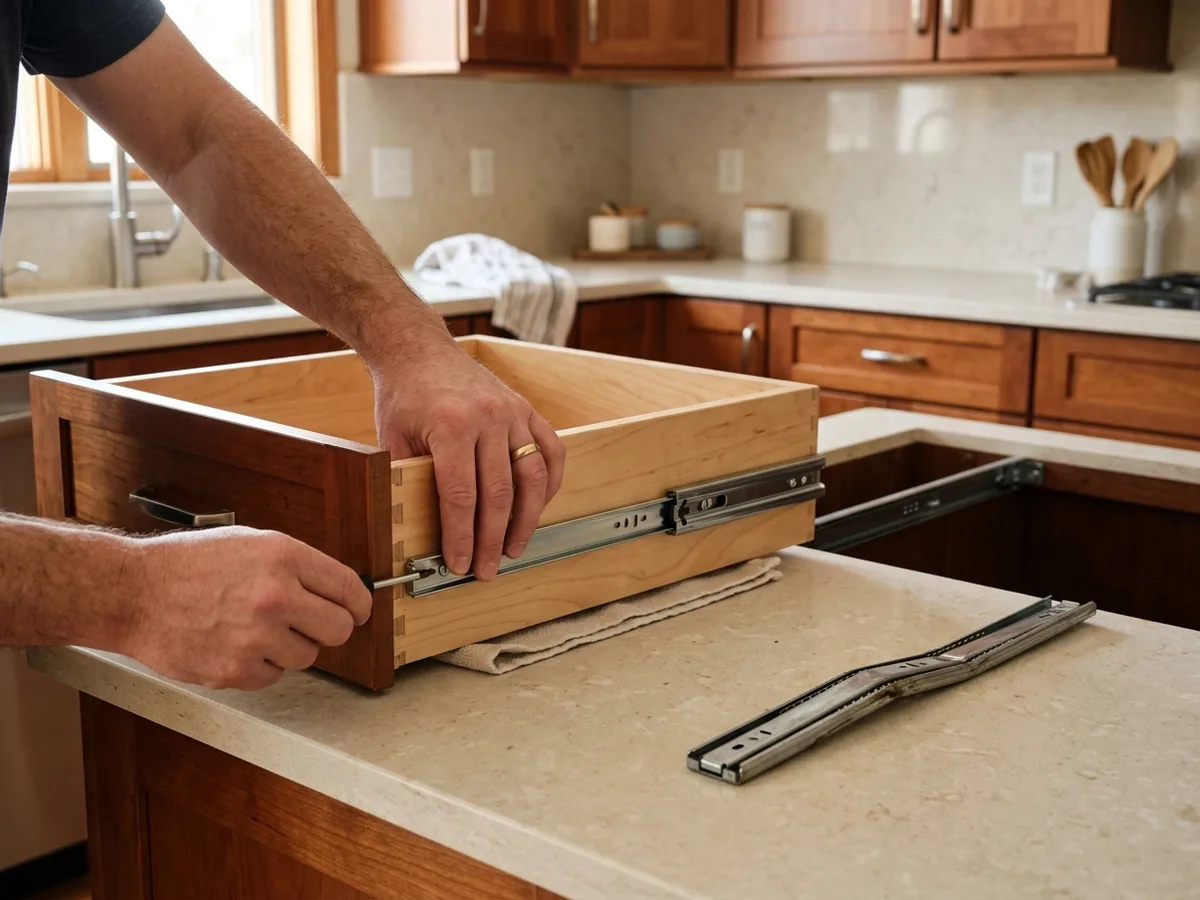
Drawer Box and Slide Repair
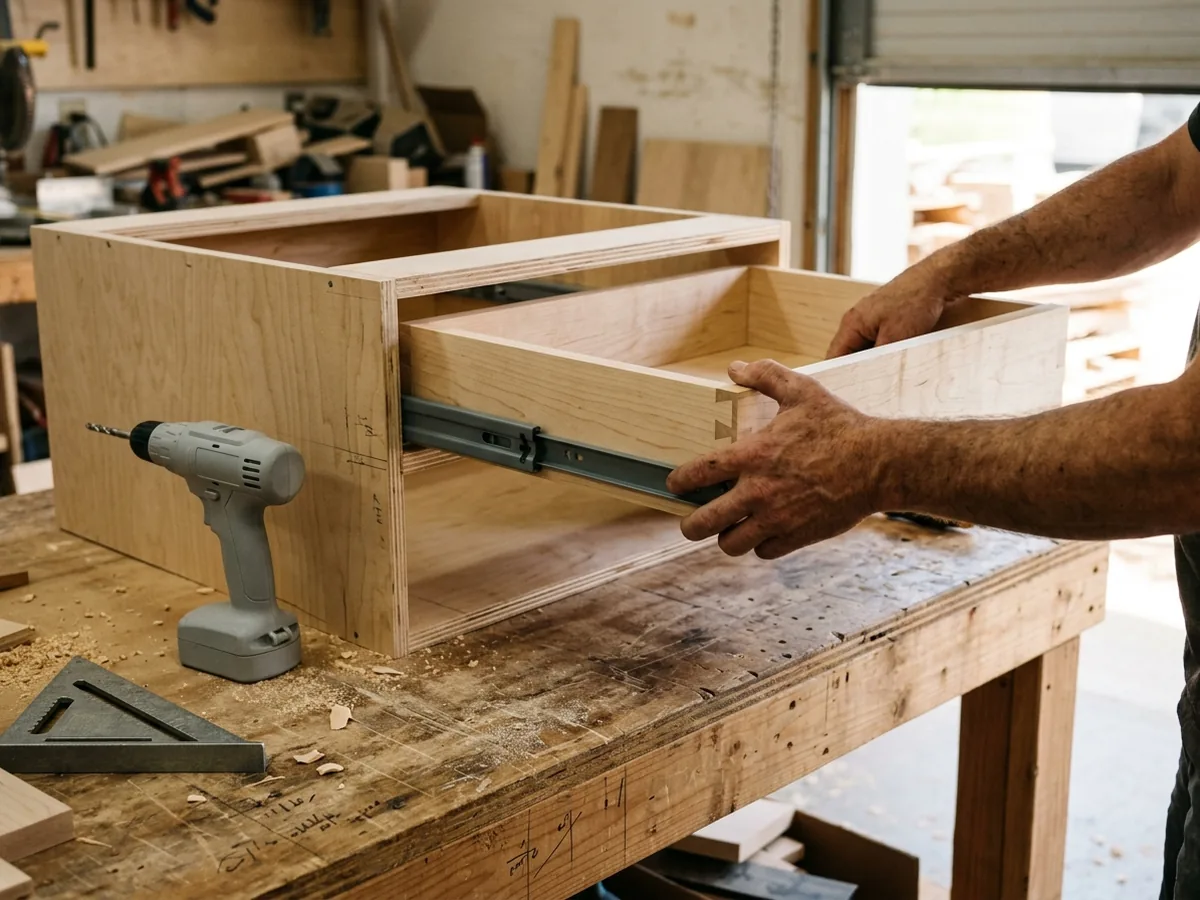
Drawers fail in two places: the slide and the box. Worn epoxy-coated roller slides and bent ball-bearing slides can be swapped for new ones of the same length and mounting type. Undermount slides need a drawer box built for them, with a notch at the back and a recessed bottom, so moving from side-mount to undermount usually means a new box. Boxes come apart when stapled corners loosen or a thin bottom panel drops out of its groove. A new box with dovetailed or doweled corners and a thicker bottom outlasts a reglued one. Ask for slides sized for the load: a pot drawer carries far more weight than a utensil drawer.
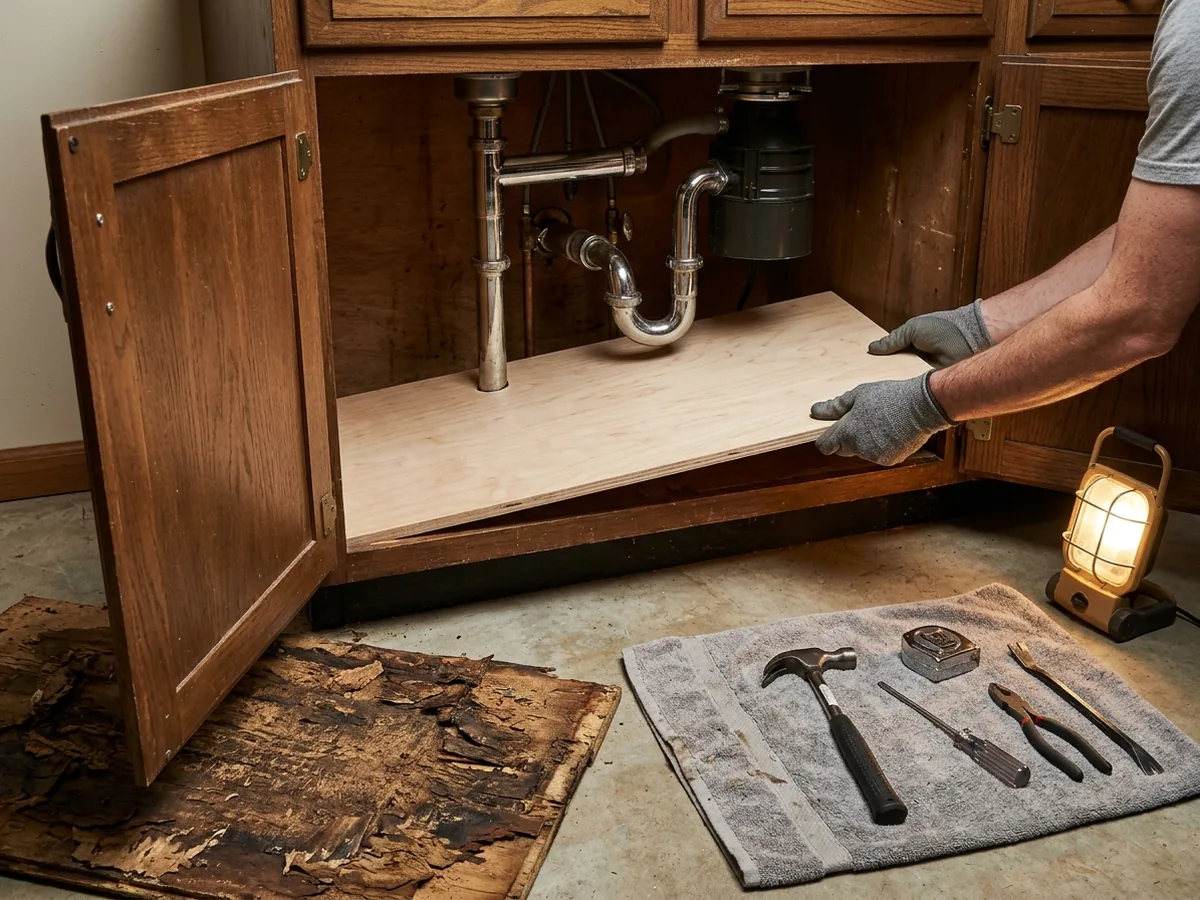
Water-Damaged Sink Bases
Sink bases are where water damage usually shows up first. A slow drip soaks into a particleboard floor until it swells and crumbles (the bathroom vanities page compares box materials). HomeGuide puts a new sink base floor at $150 to $200 and a full replacement of a water-damaged cabinet at $250 to $600. Its rule of thumb is useful: if only the floor is damaged, replace the floor; if the side panels are soft too, the whole cabinet has to go. Fix the leak first and let the space dry out. A plywood floor with a sealed finish or a removable sink-base mat makes the next leak easier to spot. If you see mold, that's a separate job.
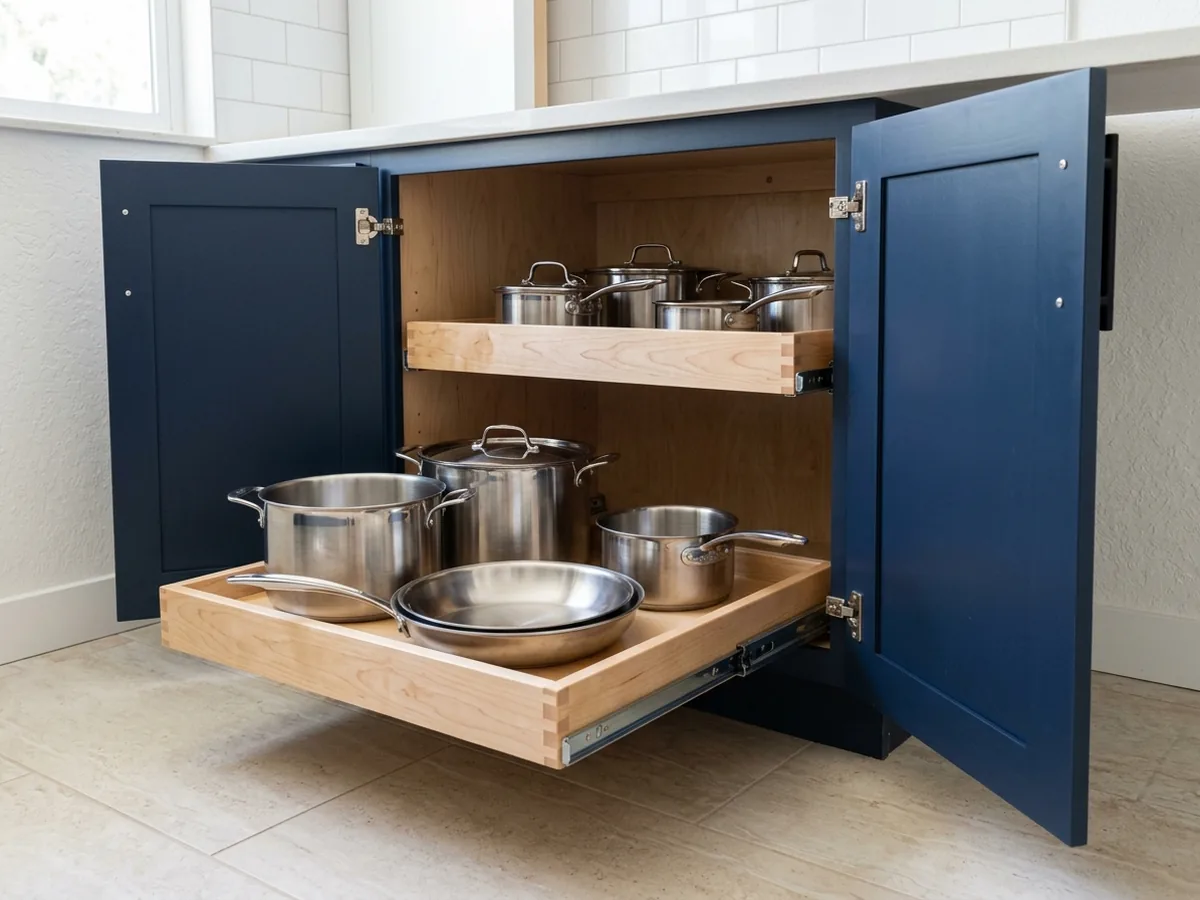
Soft-Close and Roll-Out Retrofits
Retrofits upgrade cabinets that still work. Soft-close comes two ways: hinges with built-in dampers, or add-on dampers that mount inside the box and catch the door. Drawers can get soft-close slides, sometimes with new boxes. Roll-out trays fit inside existing base cabinets on their own slides, so the back of a deep base cabinet becomes reachable. Measure the door opening, not the box, because the face frame narrows the space a tray has to pass through. New pulls are a cheap change too: HomeGuide puts installed cabinet hardware at $6 to $60 per handle, and hardware with the same hole spacing as the old drops in without filling holes.
Why St. George homeowners call St. George Cabinet Makers
- Estimates are free, and you're under no obligation to hire
- Measured on site and drawn before you commit
- Written price with species, finish and hardware listed
- One local cabinet maker per request, not a call list
- You pay nothing for the referral itself
Cabinet Repair Costs
HomeGuide's national figure for typical kitchen cabinet repairs is $120 to $600, with an average around $370. That covers jobs like a new cabinet floor or a set of hinges. A full kitchen of new handles runs $120 to $2,400 for 20 to 40 pulls. Bigger cosmetic work moves into refinishing or refacing, which are priced as whole-kitchen jobs. These are published estimates. A repair visit is often priced by the hour plus parts, so ask what a minimum charge covers.
How Cabinets Are Tested for Wear
The Kitchen Cabinet Manufacturers Association's A161.1 certification is a useful benchmark for what "durable" means, even for cabinets that aren't certified. KCMA says certified cabinets have their shelves, bottoms, wall mounts and base joints loaded and impact-tested, their doors and drawers loaded and run through 25,000 cycles, and their finishes exposed to heat, cold and household stains. There are 14 tests in all, including a 600-pound load test, and KCMA says 40% to 50% of cabinets fail their first attempt.
Those tests point at where cabinets wear out: hinges and slides, drawer bottoms under load, wall-cabinet hanging rails, and finishes near the sink. When a repair replaces a part, it's worth asking whether the new hinge or slide is better than the one that failed. Nobody can certify a repair, but you can ask what the replacement part is rated for.
InterNACHI's life-expectancy chart puts kitchen cabinets at about 50 years. A box that's still square and dry is usually worth fixing. Repair stops making sense when several sink bases are swollen, the face frames are separating, or you want a different layout. Then cabinet refacing or new cabinets is the better spend.
What to Ask Before a Repair Visit
- Send photos of the hinge, slide or damage, plus any part numbers stamped on the hardware.
- Ask whether parts are matched to what's there or replaced with a different system.
- For water damage, ask whether the floor alone or the whole cabinet needs replacing, and how the new piece will be finished to match.
- For retrofits, get the slide or damper make and model and its load rating.
- Ask whether drawer boxes are reglued or rebuilt, and how the corners are joined.
- Get the price for parts and labor in writing before work starts.
If the cabinets are sound but the finish is tired, cabinet refinishing picks up where repair leaves off. Loose cabinets that pull away from the wall are an installation problem, not a hinge problem.